Don Giovanni or The Dissoluted Absolved
My Don Giovanni starts where Lorenzo da Ponte's ends, it is somehow complementary to his. And the question that constitutes the starting point of my novels – “What if the Iberian Peninsula separated from Europe? What if Plato's cave was under a shopping mall?» – is also found in this piece: "What if Don Giovanni hadn't fallen into hell?" Having asked the question, the essential question, the conclusions emerge almost spontaneously
Foundation
Portugal
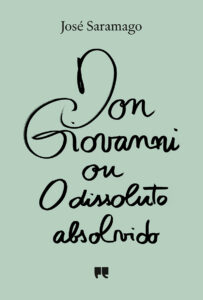
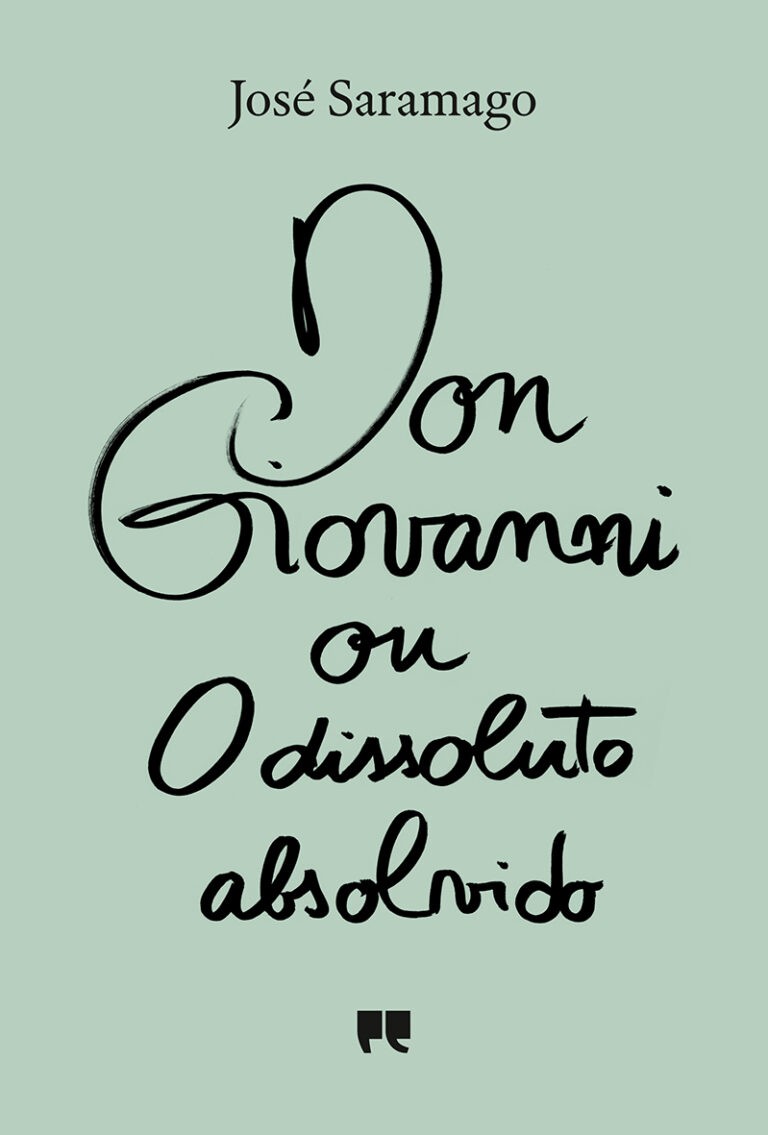
The calligraphy on the cover is by the composer Alexandre Delgado
Based on Mozart's opera Don Giovanni or The Dissolute Punished in which Don Giovanni is condemned to hell for having seduced 2065 women, José Saramago, in Don Giovanni or The Dissolute Absolved, reanalyses the myth: is Don Giovanni guilty? And the Commander, and Dona Ana, and Dona Elvira, and Don Octávio? Will they be a model of virtues? Where is the blame? Where is the virtue? Where is the hypocrisy?
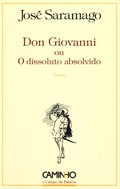
Editorial Path
2005
Language
Portuguese
Starting from Mozart's opera Don Giovanni, or The Dissolute Punished, in which Don Giovanni is condemned to hell for having seduced 2065 women, José Saramago, in Don Giovanni, or The Dissolute Absolved, reanalyzes the myth: is Don Giovanni guilty? And the Commendatore, and Dona Ana, and Dona Elvira, and Don Octavio? Are they models of virtue? Where is the guilt? Where is the virtue? Where is the hypocrisy?
Brazil
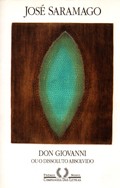
In Don Giovanni or The Dissolute Absolved, José Saramago returns to the theater, a genre he hadn't revisited since In Nomine Dei in 1993. And this return is in grand style, as the Portuguese writer decided to retell, in his own way, one of the most important and well-known plots in the history of literature: that of Don Juan, the implacable seducer. This character appears in the works of numerous authors, such as Tirso de Molina, Molière, Hoffmann, Byron, and Pushkin. The text is the basis for the libretto of an opera by the Italian composer Azio Corghi, staged at La Scala in Milan. Saramago's direct reference is Mozart's Don Giovanni or The Dissolute Punished, which premiered in Prague in 1787, conducted by the composer himself. The main modification Saramago introduces to the plot is the ending, as indicated by the change from "punished" to "absolved" in the title of the work. Similar to the traditional version, here too the statue of the Commendatore, who was killed by Don Giovanni, leaves the cemetery and appears to dine at the womanizer's house seeking reparation for the offended honor of his daughter, Dona Ana. But this time his attempts at revenge don't work as he expected. Dona Elvira, one of the 2065 women on Don Giovanni's list of conquests, attempts another trick to catch him after her attempts at reconciliation fail. This trick, however, also doesn't achieve the planned result. In this play, Saramago continues his literary project of destabilizing commonplaces and showing that not everything is as it seems. His most evident target is the notion of sin – or rather, human acts considered sinful. That is why the protagonist states: “The whole earth is a sepulcher; there are more people beneath the ground than those who still stir, work, eat, sleep, and fornicate above it. It seems that the years you have lived have not taught you much, statue. The death of the wicked is not to hell that opens, but to impunity. No one can hurt or offend you if you are already dead.” The edition has an afterword by Graziella Seminara.
Spain
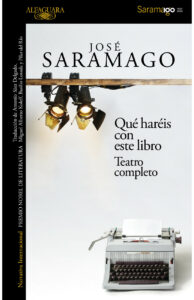
Alfaguara / Penguin Random House
2022 (Translated by Pilar del Río)
(in one volume) Qué haréis con este libro which includes the complete plays of José Saramago)
Special Edition Commemorating the Centenary of José Saramago's Birth
Language
Spanish
«The memory is the playwright that we all have inside. The distance between what was a person and what he remembers is literature.».
Foundation
Saramago called himself «the involuntary playwright», because he always felt that his contribution to the theatrical genre was marked by unlucky circumstances. But, even so, his creative genius gave light to the five works that come together in this volume: La noche (1979), What is there with this book? (1980), The Second Life of Francisco de Asís (1987), In Nomine Dei (1993) and Don Giovanni o El Dissoluto Absuelto (2005).
With the proper honesty of all his work —although coated with an apparent simplicity—, the author's irony and the acuteness of his reflections shine in these masterful pieces. The great heroes now pass to the elderly men and women who, from the honesty and firmness of their convictions, fight for freedom, justice and a better future.
Set in different times and places that go from the Portugal of the triumph of the Revolution of the Claveles or the renaissance of the poet Camões to the Germany of the Lutheran reform, the Italy of Don Giovanni or the displaced timelessness of a growing company, among them the great questions that characterize the thinking of the Portuguese Nobel Prize are not expressed judgments or sentences. It is part of a dialogue that Saramago maintained forever, from each of the pages he wrote, with his readers.
The critic said:
«Saramago vuelve comprehensible a human reality, with parables supported by imagination, compassion and irony».
Nobel Committee
«A man with a sensitivity and a capacity to see and understand that is very much above what we generally see and understand in mortal communities».
Hector Abad Faciolince
«Saramago is an example, a dignified style of life and literature, which demonstrates the possibility of sailing against the current […]. Your word has the value of an antifreeze, of a personal remedy against the gales of cynicism that envelop us».
Luis Garcia Montero
«I don't know, I don't know, from where Saramago got this diabolical narrative tone, hard and funny at a time, [...] that allows him to tell so much about the heart and sometimes so about the story».
Luis Landero
«Saramago writes novels about myths to demystify them, [...] always to address the reality that surrounds him, to deal with current problems that affect everyone, and so that everything is clear from the beginning».
Rafael Conte, Babelia
«Like Günter Grass or Cees Nooteboom, Saramago aspires to engage with an audience that goes beyond national limits».
The Country
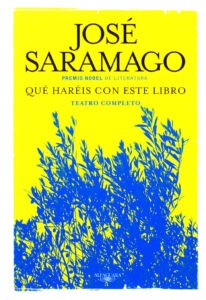
Alfaguara / Penguin Random House
2016 (Translated by Pilar del Río)
(in a volume Qué haréis con este libro that includes the complete dramaturgy by José Saramago)
Language
Spanish
«The memory is the playwright that we all have inside. Put on stage and invent a costume for each being linked to others. The distance between what was a person and what he remembers is literature.»bJosé Saramago
José Saramago called himself «the involuntary playwright» because he always felt that his contribution to this genre was marked by unlucky circumstances. But even so, his creative genius gave light to the five theatrical works that come together now in this volume: La noche (1979), What is there with this book? (1980), The Second Life of Francisco de Asís (1987), In Nomine Dei (1993) and Don Giovanni o El Dissoluto Absuelto (2005). Except for La noche and In Nomine Dei, they were published for the first time in Spain.
With the proper honesty of all his work -although coated with an apparent simplicity-, the author's irony and the acuteness of his reflections shine through in these masterful pieces. The great heroes now pass to the elderly men and women who, from the honesty and firmness of their convictions, fight for freedom, justice and a better future.
Set in different places and times ranging from the Portugal of the triumph of the Claveles revolution or the renaissance of the poet Camões, to the Germany of the Lutheran reform, to the Italy of Don Giovanni or the displaced timelessness of a growing company, among them the great questions that characterize the author's thinking are exposed without prejudice no sentences. All of them are part of a dialogue that Saramago maintained forever, from each of the pages he wrote, with his readers.
Italy
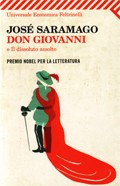
“Vero is what I always think about Don Giovanni not being so captivating as at the time he was thinking about Tirso de Molina in poi, right Donna Anna and Donna Elvira of such an innocent creature, for not parlare del Commendatore, pure ritratto of an onore social offense, right now a Don Ottavio is trying to hide it vigliaccheria sotto le affabili battute che va via declamando nel testo di Lorenzo da Ponte insisted, insisted, and allora, come ultima possibilità, attirato dalla sfida, ma nello stesso tempo intimidito dalla responsabilità dell'impresa, gli disse que se mi vain un'idea, una buona idea, ci avrei provato. It was time, it was passing. For the past few months, I have dominated Azio, and finally the idea is born. Now I came to the conclusion that this potrebbe was not as good as at first I was parse, but the outcome is a question. Si può alzare il sipario. Maintain the music, which is always the best thing ever. Speriamo that the letter can be heard, avvicinando bene l'orecchio alla pagina, quell'altra musica che possiedono le parole e che queste forse non hanno del tutto perduto.” (José Saramago)
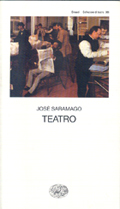
Einaudi
2005 (Translated by Rita Desti)
Language
Italian
A southern variation on the intramontabile myth of Don Giovanni.
«Vero is the one who always thought about Don Giovanni not being so captivating as at the time he avevano dipinto da Tirso de Molina in poi, not Donna Anna and Donna Elvira of his creature so innocent, but not parlare del Commendatore, pure ritratto of an onore social offense, not a Don Ottavio who is willing to dissimulate it vigliaccheria sotto le affabili battute che va via via declamando nel testo di Lorenzo da Ponte. Azio Corghi insisted, insisted, and allora, come ultima possibilità, attirato dalla sfida, ma nello stesso tempo intimidito dalla responsabilità dell'impresa, gli said that if I were a lucky one, a good idea, I avrei provato. Time passed, it passed within a month, with Azio he dominated, and finally the idea was born. Now I came to the conclusion that this potrebbe was not as good as at first I was parse, but the outcome is a question. Si può alzare il sipario. Maintain the music, which is always the best thing ever. Speriamo that the letter can be heard, avvicinando bene l'orecchio alla pagina, quell'altra musica che possiedono le parole e che queste forse non hanno del tutto perduto». José Saramago