Almost object
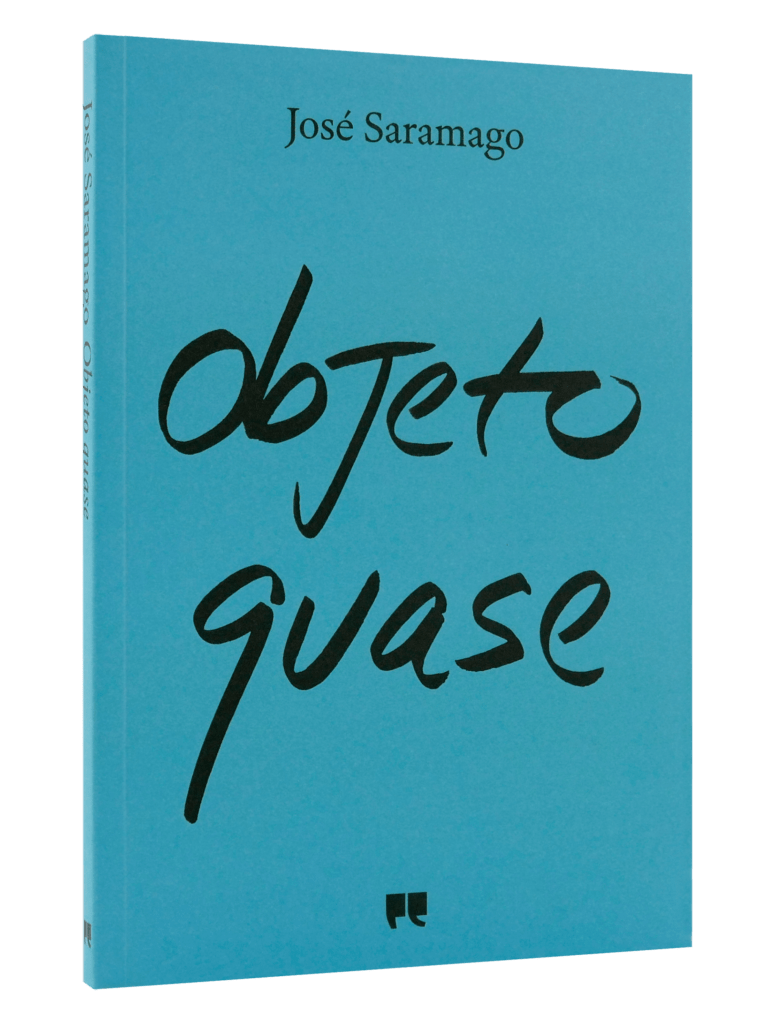
It doesn't seem to me that the Object Almost is a sequence of paintings, just as it didn't result from a mechanical juxtaposition of texts written according to circumstances. The book has a project and a plan, it clearly proposes against alienation – the Marx and Engels epigraph is not there by chance
Foundation
Portugal
2015 (1st edition at Porto Editora; 7th edition)
Language
Portuguese
The calligraphy on the cover is by the writer Joao Tordo
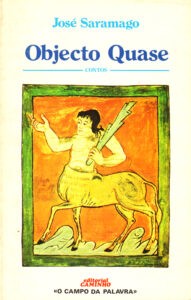
The dictator fell off a chair, the Arabs stopped selling oil, the dead are the living's best friend, things are never what they seem, when you see a centaur believe your eyes, if a frog taunts you crosses the river. Everything is objects. Almost.
Editorial Path
1984, 6th ed., 2010
Language
Portuguese
The dictator fell off a chair, the Arabs stopped selling oil, the dead are the living's best friend, things are never what they seem, when you see a centaur believe your eyes, if a frog taunts you crosses the river. Everything is objects. Almost.
Foundation
Editorial Path
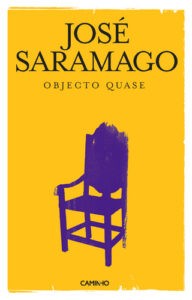
1984, 6th ed., 2010
Language
Portuguese
The dictator fell off a chair, the Arabs stopped selling oil, the dead are the living's best friend, things are never what they seem, when you see a centaur believe your eyes, if a frog taunts you crosses the river. Everything is objects. Almost.
Foundation
Editorial Path
1984, 6th ed., 2010
Language
Portuguese
The dictator fell off a chair, the Arabs stopped selling oil, the dead are the living's best friend, things are never what they seem, when you see a centaur believe your eyes, if a frog taunts you crosses the river. Everything is objects. Almost.
Foundation
Germany

2017 (hardcover edition); 2014 (Translated by Andreas Klotsch, Sarita Brandt)
Language
German
Ein Sofa erkrankt an Fieber, Türen werden zu angriffslustigen Kreaturen, Briefkästen und ganze Gebäude verschwinden… In seinen Erzählungen nähert sich der große portugiesische Schriftsteller José Saramago einem tiefgründigen und facettenreichen Thema: Was hat es mit “den Dingen” auf sich, die uns alltäglich mit scheinbarer Selbstverständlichkeit umgeben? Welche Macht haben sie über uns ?

2017 (hardcover edition); 2014 (Translated by Andreas Klotsch, Sarita Brandt)
Language
German
Ein Sofa erkrankt an Fieber, Türen werden zu angriffslustigen Kreaturen, Briefkästen und ganze Gebäude verschwinden… In seinen Erzählungen nähert sich der große portugiesische Schriftsteller José Saramago einem tiefgründigen und facettenreichen Thema: Was hat es mit “den Dingen” auf sich, die uns alltäglich mit scheinbarer Selbstverständlichkeit umgeben? Welche Macht haben sie über uns ?
Ein Sofa erkrankt an Fieber, Türen werden zu angriffslustigen Kreaturen, Briefkästen und ganze Gebäude verschwinden, um zu Menschen zu werden. In seinen phantastischen Erzählungen nähert sich der große portugiesische Schriftsteller José Saramago einem tiefgründigen und facettenreichen Thema. Was hat es mit “den Dingen” auf sich, die uns alltäglich mit scheinbarer Selbstverständlichkeit umgeben ? Welche Macht haben sie über uns ?
Ein Sofa erkrankt an Fieber, Türen werden zu angriffslustigen Kreaturen, Briefkästen und ganze Gebäude verschwinden, um zu Menschen zu werden. In seinen phantastischen Erzählungen nähert sich der große portugiesische Schriftsteller José Saramago einem tiefgründigen und facettenreichen Thema. Was hat es mit “den Dingen” auf sich, die uns alltäglich mit scheinbarer Selbstverständlichkeit umgeben ? Welche Macht haben sie über uns ?
Ein Sofa erkrankt an Fieber, Türen werden zu angriffslustigen Kreaturen, Briefkästen und ganze Gebäude verschwinden, um zu Menschen zu werden. In seinen phantastischen Erzählungen nähert sich der große portugiesische Schriftsteller José Saramago einem tiefgründigen und facettenreichen Thema. Was hat es mit “den Dingen” auf sich, die uns alltäglich mit scheinbarer Selbstverständlichkeit umgeben ? Welche Macht haben sie über uns ?
Argentina
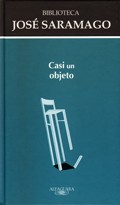
«If the man is formed by circumstances, then it is necessary to form the circumstances humanly.» Karl Marx and Friedrich Engles, La Sagrada Familia
Six stories that give an account of the social and political concerns of this maestro of Portuguese literature.
In «Silla», a carcoma was gnawing at Salazar's seat until the dictatorship fell. «Embargo» tells us about the occupation of a man by his car, while the gasoline is running out and the death is over both. In «Reflujo», a single cementary will absorb all the rest, until the death of the monarch. In «Cosas» the author imagines a city subject to an absolute dictatorship. A last fantastic being, half a man and half a horse, has been hiding for centuries in the shadows of «Centauro». And «Desquite» is a parable in which a boy throws himself into a river knowing that a naked girl awaits him on the other shore.
Saramago offers us in this book a collection of stories that irrevocably imprint the reader's memory.
Brazil
“The dictator fell from a chair, the Arabs stopped selling oil, the dead are the living's best friend, things are never what they seem, when you see a centaur believe your eyes, if a frog mocks you, cross the river. Everything is an object. Almost.” From the short story “Chair.” First published in 1978, these six short and tense narratives reveal the roots of the marvelous in Saramago. Absurd, lyrical, ironic, they translate a capitalism in agony, an atmosphere of the end of the line, of societies in which consumer goods circulate at the expense of life itself. Hence the writing that moves in cycles, emulating alternating rhythms of crisis and prosperity, parodying the equally incessant, distanced, and meaningless circulation of goods. And, separated from the world, consciousness elaborates its revenge. Perhaps the greatest of all is language, which is intended to wound and refer to things from a distance. Hence the enduring critical power of these writings, capable of skillfully and knowledgeably blending the poetic and the political.
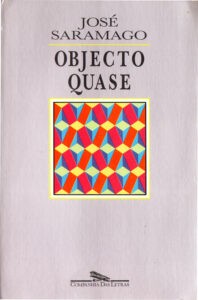
“The dictator fell from a chair, the Arabs stopped selling oil, the dead are the living's best friend, things are never what they seem, when you see a centaur believe your eyes, if a frog mocks you, cross the river. Everything is an object. Almost.” From the short story “Chair.” First published in 1978, these six short and tense narratives reveal the roots of the marvelous in Saramago. Absurd, lyrical, ironic, they translate a capitalism in agony, an atmosphere of the end of the line, of societies in which consumer goods circulate at the expense of life itself. Hence the writing that moves in cycles, emulating alternating rhythms of crisis and prosperity, parodying the equally incessant, distanced, and meaningless circulation of goods. And, separated from the world, consciousness elaborates its revenge. Perhaps the greatest of all is language, which is intended to wound and refer to things from a distance. Hence the enduring critical power of these writings, capable of skillfully and knowledgeably blending the poetic and the political.
Colombia
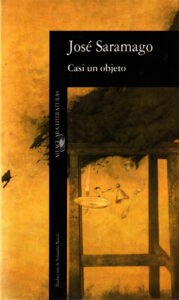
It's a book of exceptional stories by an author that the Spanish public has learned to consider just as important. One by one, José Saramago's stories irrevocably capture the reader's sensitivity and memory.
Spain
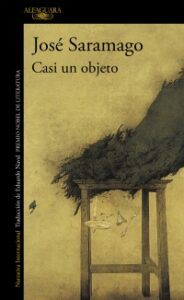
1994, 2003; 2006 (Punto de lectura - pocket edition); 2011 (Saramago Library Collection); 2018 (International Narrative Collection) (Translated by Eduardo Naval)
Language
Spanish
One by one, the stories of José Saramago irrevocably capture the reader's sensitivity and memory. In Silla, a carcoma was thoroughly gnawing away at Salazar's residence until the dictatorship fell. We are still aware of the occupation of a man by his car, while the gasoline is running out and the death is over both. In Reflujo, a huge and unique cemetery will absorb all the rest until the death of the monarch. In Cosas, moving between science fiction like Huxley and Jungian humanism, Saramago imagines a city subject to an absolute dictatorship, where dissidence becomes concrete in the rebellion of objects. A last fantastic being, half a man and half a horse, has been hiding for centuries in the Centaur. Y Desquite is a brief parable in which a man contemplates the castration of a cerdo and launches himself into a river to swim across it, while looking at a frog, knowing that a naked girl awaits him on the edge of the river.
The author thus accumulates all the literary flavors of Casi un object: «The dictator fell from a land, the Arabs stopped selling oil, the dead man is the best friend of the living, things are never what they seem, when you see a centauro trusts in your eyes, if a rana mocks you, crosses the river. They are all objects. Casi.» All the accounts are splendid.
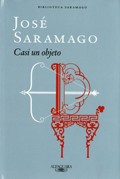
1994, 2003; 2006 (Punto de lectura - pocket edition); 2011 (Saramago Library Collection); 2018 (International Narrative Collection) (Translated by Eduardo Naval)
Language
Spanish
One by one, the stories of José Saramago irrevocably capture the reader's sensitivity and memory. In Silla, a carcoma was thoroughly gnawing away at Salazar's residence until the dictatorship fell. We are still aware of the occupation of a man by his car, while the gasoline is running out and the death is over both. In Reflujo, a huge and unique cemetery will absorb all the rest until the death of the monarch. In Cosas, moving between science fiction like Huxley and Jungian humanism, Saramago imagines a city subject to an absolute dictatorship, where dissidence becomes concrete in the rebellion of objects. A last fantastic being, half a man and half a horse, has been hiding for centuries in the Centaur. Y Desquite is a brief parable in which a man contemplates the castration of a cerdo and launches himself into a river to swim across it, while looking at a frog, knowing that a naked girl awaits him on the edge of the river.
The author thus accumulates all the literary flavors of Casi un object: «The dictator fell from a land, the Arabs stopped selling oil, the dead man is the best friend of the living, things are never what they seem, when you see a centauro trusts in your eyes, if a rana mocks you, crosses the river. They are all objects. Casi.» All the accounts are splendid.
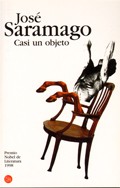
1994, 2003; 2006 (Punto de lectura - pocket edition); 2011 (Saramago Library Collection); 2018 (International Narrative Collection) (Translated by Eduardo Naval)
Language
Spanish
One by one, the stories of José Saramago irrevocably capture the reader's sensitivity and memory. In Silla, a carcoma was thoroughly gnawing away at Salazar's residence until the dictatorship fell. We are still aware of the occupation of a man by his car, while the gasoline is running out and the death is over both. In Reflujo, a huge and unique cemetery will absorb all the rest until the death of the monarch. In Cosas, moving between science fiction like Huxley and Jungian humanism, Saramago imagines a city subject to an absolute dictatorship, where dissidence becomes concrete in the rebellion of objects. A last fantastic being, half a man and half a horse, has been hiding for centuries in the Centaur. Y Desquite is a brief parable in which a man contemplates the castration of a cerdo and launches himself into a river to swim across it, while looking at a frog, knowing that a naked girl awaits him on the edge of the river.
The author thus accumulates all the literary flavors of Casi un object: «The dictator fell from a land, the Arabs stopped selling oil, the dead man is the best friend of the living, things are never what they seem, when you see a centauro trusts in your eyes, if a rana mocks you, crosses the river. They are all objects. Casi.» All the accounts are splendid.
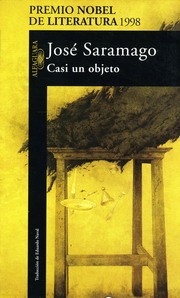
1994, 2003; 2006 (Punto de lectura - pocket edition); 2011 (Saramago Library Collection); 2018 (International Narrative Collection) (Translated by Eduardo Naval)
Language
Spanish
One by one, the stories of José Saramago irrevocably capture the reader's sensitivity and memory. In Silla, a carcoma was thoroughly gnawing away at Salazar's residence until the dictatorship fell. We are still aware of the occupation of a man by his car, while the gasoline is running out and the death is over both. In Reflujo, a huge and unique cemetery will absorb all the rest until the death of the monarch. In Cosas, moving between science fiction like Huxley and Jungian humanism, Saramago imagines a city subject to an absolute dictatorship, where dissidence becomes concrete in the rebellion of objects. A last fantastic being, half a man and half a horse, has been hiding for centuries in the Centaur. Y Desquite is a brief parable in which a man contemplates the castration of a cerdo and launches himself into a river to swim across it, while looking at a frog, knowing that a naked girl awaits him on the edge of the river.
The author thus accumulates all the literary flavors of Casi un object: «The dictator fell from a land, the Arabs stopped selling oil, the dead man is the best friend of the living, things are never what they seem, when you see a centauro trusts in your eyes, if a rana mocks you, crosses the river. They are all objects. Casi.» All the accounts are splendid.
1994, 2003; 2006 (Punto de lectura - pocket edition); 2011 (Saramago Library Collection); 2018 (International Narrative Collection) (Translated by Eduardo Naval)
Language
Spanish
One by one, the stories of José Saramago irrevocably capture the reader's sensitivity and memory. In Silla, a carcoma was thoroughly gnawing away at Salazar's residence until the dictatorship fell. We are still aware of the occupation of a man by his car, while the gasoline is running out and the death is over both. In Reflujo, a huge and unique cemetery will absorb all the rest until the death of the monarch. In Cosas, moving between science fiction like Huxley and Jungian humanism, Saramago imagines a city subject to an absolute dictatorship, where dissidence becomes concrete in the rebellion of objects. A last fantastic being, half a man and half a horse, has been hiding for centuries in the Centaur. Y Desquite is a brief parable in which a man contemplates the castration of a cerdo and launches himself into a river to swim across it, while looking at a frog, knowing that a naked girl awaits him on the edge of the river.
The author thus accumulates all the literary flavors of Casi un object: «The dictator fell from a land, the Arabs stopped selling oil, the dead man is the best friend of the living, things are never what they seem, when you see a centauro trusts in your eyes, if a rana mocks you, crosses the river. They are all objects. Casi.» All the accounts are splendid.
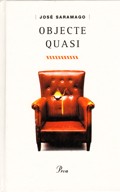
The old dictator will give a rose-colored chair to a tan-colored corc with labor. They will stop selling petrol, the petrol tanks will be tanked and a driver will be segregated by his cotxe. The death is the best friend of the saw.
France
Quasi objets defendantit des texts à la prose sèche et sobre, mais à la charge poétique intense, où nous retrouvons les paysages, les attitudes, les gestures, les mots empruntés à notre univers mais que José Saramago détourne sous la forme de fantaisies qui sont le prolongement de notre réel. These récits allégoriques illustrent les grands thèmes de l'œuvre de José Saramago, qui lui ont valu d'être reconnu et traduit dans le monde entier : l'obsession de la fuite du temps, la question de l'identité, le voyage comme parcours, expérience et apprentissage, et finally la complexité des rapports entre la vérité et la fiction, entre l'être et son désir, entre la nature et le fantasy.
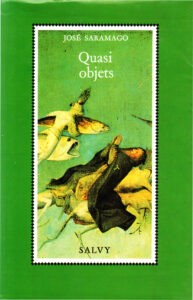
Salvy
1990 (Translated by Claude Fages)
Language
French
Salvy
1990 (Translated by Claude Fages)
Greece
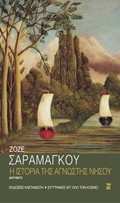
Kastaniotis
2008 [Trans: Athina Psillia (Αθηνά Ψυλλιά)]
(in a volume with The Tale of the Unknown Island)
Language
Greek
Ένας άνθρωπος ζητάει ένα καράβι για να βρει την «άγνωστη νήσο». Ποια όμως είναι αυτή η άγνωστη νήσος; Πώς ο καθένας από εμάς μπορεί να την αναγνωρίσει; Πώς αναγνωρίζουμε τον ίδιο τον εαυτό μας; Ένας δικτάτορας πέφτει από την καρέκλα του. Ένας οδηγός προσπαθεί να βρει βενζίνη σε περίοδο κρίσης του πετρελαίου και μεταδίδει τη νεύρωσή του στο αυτοκίνητό του. Ένας βασιλιάς προσπαθεί να αποκλείσει το θάνατο από την επικράτειά του. Kάποια αντικείμενα επαναστατούν στην ανατριχιαστικά γραφειοκρατική κοινότητα των ανθρώπων. Ένας κένταυρος νοσταλγεί το μυθικό παρελθόν του. Kι ένα εφηβικό άχτι εκδικείται το. and αντίστροφο. Eπτά ιστορίες για εκείνοτο κομμάτι της πραγματικότητας που διαφεύγει από κάθε λογική διεργασία. διηγήματα την κατανόηση της τέχνης του μεγάλου νομπελίστα συγγραφέα.
Israel

2009 [Translated by Miriam Tivon]
(in a volume containing The Tale of the Unknown Island and the stories: “Centaur” and “Revenge”)
Language
Hebrew
שלושה סיפורים שבהם מביט סאראמאגו, בשלושה סגנונות ומשלוש פרספקטיבות, ב”אי הנעלם”: איש ואשה לבדם.
הסיפור על האי הנעלם נפתח באיש שמתדפק על שער הבקשות בארמונו של מלך ומטריד את מנוחת השכנים. המלך עצמו מבלה את כל זמנו ליד שער התשורות שמביאים לו, ולכן מי שפותחת לבסוף את שער הבקשות כדי טפח היא האשה המנקה. אך אין לה ברירה אלא להביא את המלך אישית, כדי לשמוע את הבקשה המוזרה של “המטורף חסר-התקנה”: הלה מבקש ספינה בשביל לחפש את האי הנעלם, בעולם שבו כל האיים כבר התגלו ומופו. כך נפתחת האגדה המודרנית הזאת, השנונה והמרהיבה, שתתגלגל לסיפור מסע שופע חן וקסם, שהוא גם סיפור התאהבותם של איש ואשה.
קנטאור הוא סיפור פנטסטי על חצי-סוס חצי-גבר, שריד אחרון לשבט הקנטאורים המיתולוגי, הנקלע לעולם מודרני ונקרע תחת זרם-התודעה המסוכסך בשל שתי הישויות המנוגדות שבו. המפגש המרטיט של חצי-האיש עם אשה שלמה מוליך את הסיפור אל שיאו.
פיצוי הוא סיפור אכזרי בריאליזם שלו, שמתחולל בו מפגש ראשון של נער עם מבטה של נערה. אומנם נמצאת בסביבה גם הצפרדע מאגדת הנסיכה, אבל זו רק צוללת , “כאילו ריפאו את עצמם מעיוורונם”.
“– סגנון שהתגבש כשהסופר היה כבן שישים. שני הסיפורים הווירטואוזיים שנוספו עליו כאן הם 'סאראמאגו שלפני סאראמאגו': שניהם נכתבו לפני שגובש הסגנון הסאראמאגואי שאין-לטעות-בו, אך בכישרון עוצר-נשימה.
“הסיפור על האי הנעלם” ראה אור בעברית בשנת 2002, במהדורה מיוחדת שכללה ציורי צבע של אסף בן צבי. ספר זה לא יודפס שוב. “קנטאור” נכלל בספר 'האנתולוגיה החדשה' (2000). ‘פיצוי’, הקצר בין השלושה, מתורגם כאן לראשונה.
Italy
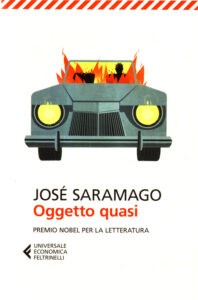
E se gli oggetti sfuggissero alla loro natura di muti testimoni, per diversentare diversely protagonisti, soggetti endow his own pensiero and own decision-making capacity? The surreal image of José Saramago may succeed. Gli effetti di questo dream postamento straordinari sleep. Gli oggetti assumes a personalità and un'inedita moralità, ribellandosi ai loro proprietari e guidandoli in behavior bizzarri e autolesionistici. I don't understand this book – published in 1978 – the epidemic's indipendence is different and radical. In Sedia the protagonist is an occupied seat of a man who al rallentatore viene indotto a cadere (metaphor neppure troppo velata della fine del dittatore portghese Salazar, dead in the wake of a rovinous caducuta of a sedia). In Embargo invece, a situation at the time of the oil block sancito dai paesi arabi, l'auto utilizzata da un comune impiegato per andare a lavorare diversenta protagonist. This is not the case, deciding firmly to block the conductor with the belt of sicurezza, but to bring death to a strong final scene on the front of the ocean. Questi, insieme ad altri quattro racconti, compongono un libro straordinario per capacità creativa e scrittura, degno delle migliori pagine del grande autre portoghese, in cui appare al meglio la sua grande vena fantastica e surreale.
Einaudi
1997 (Translated by Rita Desti), 2007 (paperback edition)
Language
Italian
«Un dittatore cade da una sedia, gli arabi smettono di solde petrolio, il morto è il miglior amico del vivo, le se se non somno quello che sembrano, que vedi un centauro credi ai tuoi occhi, se una rana tie ya in giro atraversa il fiume. Tutti sono oggetti. Almost». José Saramago
In the imagination of José Saramago, he did not have to spend much of his time in the imagination to take on a dangerous indipendenza, as he put the fantasy into practice. In the Headquarters, the main protagonist is the main protagonist of a victim without the name of a rallentatore (but it is not difficult to recognize the Portuguese author António de Oliveira Salazar, a little eroically dead for a young man of the headquarter whose cui riposava). In Embargo the protagonist is not so much the impiegato that he is walking to work in auto, but the auto stessa, sorta di machine infernale che si ribella all'embargo sul petrolio voluto dagli arabi e porta alla morte il padrone conducente. In this book, the epidemic of indipendensity differs, the fantastic element restitutes a world for itself that is less functional, but only lasts for a while in summer. You can then traverse a new territory.
Einaudi
1997 (Translated by Rita Desti), 2007 (paperback edition)
Language
Italian
«Un dittatore cade da una sedia, gli arabi smettono di solde petrolio, il morto è il miglior amico del vivo, le se se non somno quello che sembrano, que vedi un centauro credi ai tuoi occhi, se una rana tie ya in giro atraversa il fiume. Tutti sono oggetti. Almost». José Saramago
In the imagination of José Saramago, he did not have to spend much of his time in the imagination to take on a dangerous indipendenza, as he put the fantasy into practice. In the Headquarters, the main protagonist is the main protagonist of a victim without the name of a rallentatore (but it is not difficult to recognize the Portuguese author António de Oliveira Salazar, a little eroically dead for a young man of the headquarter whose cui riposava). In Embargo the protagonist is not so much the impiegato that he is walking to work in auto, but the auto stessa, sorta di machine infernale che si ribella all'embargo sul petrolio voluto dagli arabi e porta alla morte il padrone conducente. In this book, the epidemic of indipendensity differs, the fantastic element restitutes a world for itself that is less functional, but only lasts for a while in summer. You can then traverse a new territory.
Mexico
It's a book of exceptional stories by an author that the Spanish public has learned to consider just as important. One by one, José Saramago's stories irrevocably capture the reader's sensitivity and memory.
UK
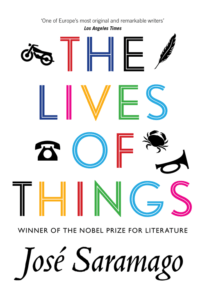
A surreal short story collection from the master of what-ifs Combining bitter satire, outrageous parody and uncanny hallucinations, this collection of José Saramago's earliest stories from the beginning of his writing career attests to the novelist's imaginative power and incomparable skill in elaborating the most extravagant fantasies. Each tale is a wicked, surreal take on life under dictatorship: in 'Embargo' a man drives around a city that is slowly running out of petrol; 'The Chair' recounts what happens when dictator Salazar falls off his chair and dies; in the Kafkaesque 'Things' the life of a civil servant is threatened as objects start to go missing.
The most gifted novelist. . . in the world today.”
Harold Bloom
“"No one writes quite like Saramago, so solicits and yet so magnificently free. He works as though cradling a thing of magic."”
Steven Poole, Guardian
“Bittersweet beauty but also a wickedly mischievous sense of humor… parables in human compassion, celebrating the triumph of the human spirit.”
Irish Times
“A poetic encapsulation of Saramago's extraordinary talent.”
Bookforum
“Saramago is a writer, like Faulkner, so confident of his resources and ultimate destiny that he can bring any improbability to life.”
John Updike, New Yorker
“These early stories are a reminder of why he deserved the Nobel prize.”
Scotland on Sunday
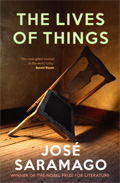
A surreal short story collection from the master of what-ifs Combining bitter satire, outrageous parody and uncanny hallucinations, this collection of José Saramago's earliest stories from the beginning of his writing career attests to the novelist's imaginative power and incomparable skill in elaborating the most extravagant fantasies. Each tale is a wicked, surreal take on life under dictatorship: in 'Embargo' a man drives around a city that is slowly running out of petrol; 'The Chair' recounts what happens when dictator Salazar falls off his chair and dies; in the Kafkaesque 'Things' the life of a civil servant is threatened as objects start to go missing.
The most gifted novelist. . . in the world today.”
Harold Bloom
“"No one writes quite like Saramago, so solicits and yet so magnificently free. He works as though cradling a thing of magic."”
Steven Poole, Guardian
“Bittersweet beauty but also a wickedly mischievous sense of humor… parables in human compassion, celebrating the triumph of the human spirit.”
Irish Times
“A poetic encapsulation of Saramago's extraordinary talent.”
Bookforum
“Saramago is a writer, like Faulkner, so confident of his resources and ultimate destiny that he can bring any improbability to life.”
John Updike, New Yorker
“These early stories are a reminder of why he deserved the Nobel prize.”
Scotland on Sunday
Romania
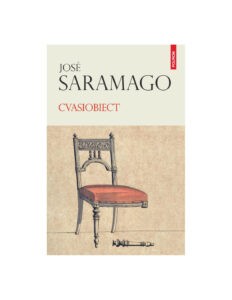
Combinaţie de satiră amară, parodie şocantă şi halucinaţie bizarre, Cvasiobiect marchează debutul lui José Saramago în proza scurtă. Fiecare text prezintă o viziune suprarealistă şi uneori tragicomică asupra vieţii sub dictatură. In this case „Lucruri”, there is no function of stat this ameninţată of dispariţia obiectelor din jur. În „Embargou”, a neidentificat bărbat se verde captiv în propria maşină apparent fără motive. În „Reflux”, un rege fără nume se teme a târe de moarte, încât nu supporttă vederea unei procesiuni funerare, a unei pietre tombale sau a hainelor de doliu, astfel că dispune construera unui cimitir cu ziduri gigantice ca să ascundă orice indicated referrer la moarte. Scrise în anii de după prăbuşirea dictaturii lui Salazar şi publicate în volum în 1978, povestirile reunite în Cvasiobiect testify to the strength of your imagination by Saramago's incomparable talent, which will only allow you to elaborate fantezii impresionante prin extravaganţa, give şi prin luciditatea lor.
„Asemenea lui Faulkner, Saramago este un scriitor atât de stăpân pe resursele și pe scopul său ultim, încât poate insufla viață oricărei povești, oricât de neverosimilă ar părea la prima vedere.” (John Updike)
„Cvasiobiect este o creație minunată și o lectură îmbătătoare, ca toate cărțile lui Saramago. pe tem mortalității și a limbajului și au o frumusețe delicată, ce se dezvăluie lent.” (Fast Forward Weekly)
„A gigantic al literaturii europene. savurat.” (Morning Star)
Serbia
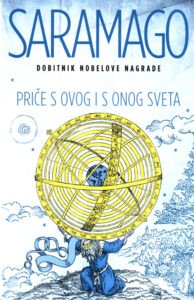
2013 (Trans.: Jasmina Nešković)
(included in the work Priče s ovog is onog sveta: “Embargo”, “Reflux”, “Things”, “Centaur” and “Revenge”)
Language
Serbian
Šta se događa kada se stvari koje ljudi upotrebljavaju pobune protiv svojih korisnika?
Kako jedan car pokušao da izoluje smrt?
Kakva je sudbinavozača, praktično zarobljenih u svojim kolima?
Zašto strada poslednji kentaur koji je vekovima šumama struggle, bežeći od ljudi?
Ispitujući vlastite izražajne mogućnosti, Saramago se najpre okušao u kratkim formama – pripovetkama, kratkim pričama, parabolama… Sabrane u dve zbirke parabola Priče s ovog is onog sveta i Putnikov prtljag, jednu zbirku pripovedaka Tobožnji predmet i novelu Priča o nepoznatom ostrvu, njegove pripovesti svedoče o sporim ali sigurnim koracima kojima se pisoc približavao svojoj pravoj vokaciji – romanu. U ovoj knjizi njegovih izabranih priča čitalac će naći ne samo mnoštvo ideja koje će blink zaokupljati čitavog života, već i sve osnovne odlike jednog neponovljivog književnog rukopisa, toliko drugačijeg da ga je nemoguće oponašati.
„Velikan evropske književnosti iznosi nam u pričama svoj osoben pogled na uvad društvenih vrednosti, otuđenje i političku represiju, nudeći svoj odgovor na takve pojave: kada sve propadne, bend metaphora je najbolja alternative.“ Morning Star
„Ovde se majstor pera ogleda u kraćim, inventivnim proznim formama, i ishod je impresivan i lucidan. Saramagov dar iu pričama se neosporno ispoljio kao iu njegovim romanima.“ Publishers Weekly
Turkey
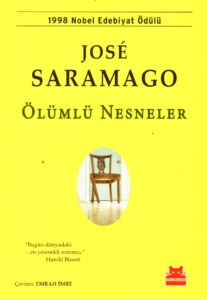
José Saramago'nun Portekiz'de Salazar diktatörlüğü altında yaşadığı dönemde yazdığı öykülerden oluşan, ülkesinde ilk defa 1975 yılında yayımlanmış Ölümlü Nesneler, büyük ustanın dünya çapında ünlenmesine ve Nobel Ödülü'nün kendisine layık görülmesine sebep olan müthiş ironisinin, muazzam öngörüsünün ve zekice geliştirdiği özgün felsefi mantığının erken dönem örneklerini okurlara sunar. Bir sandalyenin diktatörlükteki kader değiştirici önemi; bütün bir ülkeyi tek bir mezara gömmeye çalışan bir leader; kendi idaresini he geçirmek isteyen bir araba ya da kimsenin itiraz etmediği baskıcı bir düzene isyan eden nesneler etrafında kurduğu bu öyküler, Saramago'nun külliyatındaki, Ölüm Bir Varmış. Bir Yokmuş ya da Körlük gibi okurların büyük hayranlık duyduğu başyapıtlarının tohumlarını da barındırır.
“Saramago da tıpkı Faulkner gibi, kendi kaynaklarına ve nihai hedefine o kadar güveniyor ki imkânsız olan herhangi bir şeye can verebilir.”
John Updike, New Yorker
(Tanıtım Bülteninden)
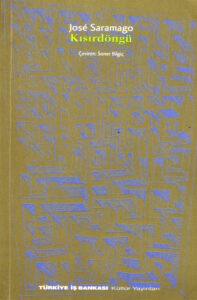
Kültür Yayinlari
2001 (Trans.: Soner Bilgiç)