Manual of Painting and Calligraphy
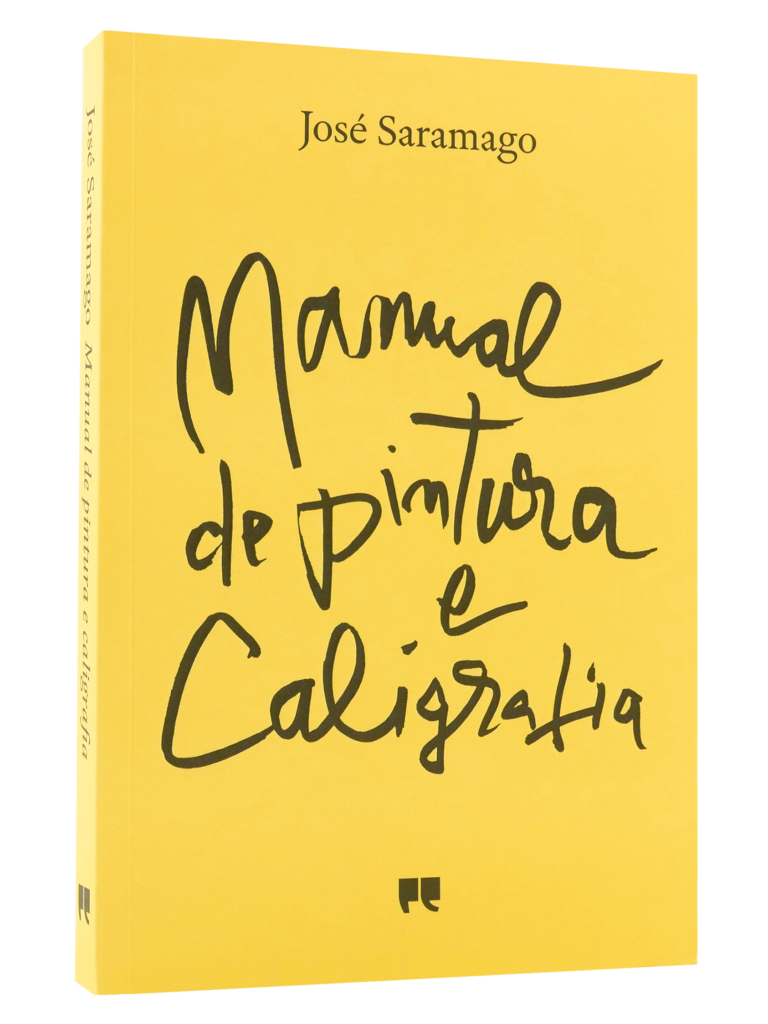
Handbook of Painting and Calligraphy is a novel that caused some surprise when it appeared. The book was well received, perhaps because of its structure, which seems even more modern than the books that came later. When I say more modern, I mean more avant-garde. There's a lot of autobiography there but it's parallel.
Foundation
Portugal
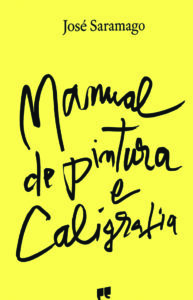
The calligraphy on the cover is by the painter Júlio Pomar
«The Manual of Painting and Calligraphy is a unique work in the genre of autobiographical literature among us and offers us, as a whole, a seed of ideas and a chart of directions of the fiction of José Saramago to date. of a complex and rich literary tradition and the experience of a time lived in the achievements of everyday life and the vicissitudes of history, which will be the substance of art itself.”
Luís de Sousa Rebelo
Path
1983, 6th ed., 2006
Language
Portuguese
«"An attachment to the concrete. A work considered unique in the genre of autobiographical literature. After investing 30 years in poetry and chronicles, José Saramago returns to his origins and recovers the novel, the genre with which he began his career. At 55, he begins a new literary life that will transform him into the best-known contemporary Portuguese writer. A letter of ideas and directions. The walls of Caxias. A painter portraying the vicissitudes of daily life. He knows that the second painting will never be finished. 'The portrait is as far from the end as I want it to be, or as close as I decide it is.' Saramago and man in time and circumstances, in light and shadow. Saramago on a journey. 'I realize that it was easier for me to say who I was than to affirm who I am today.' Saramago of anxieties and questions, of political struggle. The last page of this novel records the fall of the regime." (Diário de Notícias, October 9, 1998) “The Painting and Calligraphy Manual is a unique work in the genre of autobiographical literature in our country and offers us, as a whole, a seedbed of ideas and a roadmap for José Saramago's fiction to date. It blends the writings of a complex and rich literary tradition with the experience of a time lived amidst the trials of daily life and the vicissitudes of history, which will be the substance of art itself.” Luís de Sousa Rebelo
Germany
Der Maler H. übt noch im Zeitalter der Fotografie die Kunst des Porträts aus. Die von ihm gemalten reichen Köpfe finden Gefallen in den Escolhatagen und Villen Lissabons. Bei einem Routineauftrag gerät er jedoch in eine Krise. Sein Inneres sträubt sich dagegen, Porträts aufzubessern und zu vertuschen, was nicht gezeigt werden soll. Zunächst begnügt er sich damit, im Geheimen ein Parallel-Porträt zu schaffen, seiner Sicht des Abgebildeten gemäß, den er damit nicht zu konfrontieren wagt. Nach einer Italienreise auf den Spuren der Renaissance-Künstler beginnt er erneut einen ungeliebten Auftrag, doch nun verweigert er sich dem erwarteten Kitsch und löst einen Eklat aus, der ihn seine Existenz kosten könnte. All das fällt zusammen mit dem Einbruch der politischen Realität in sein Leben und dem einer Liebe. Endlich erfährt H. eine neue existentielle Authentizität, die ihn dazu befähigt, nicht einfach weiter zu malen, sondern ein ehrliches Selbstbildnis in Angriff zu nehmen.
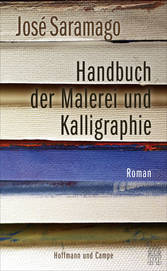
Der Porträtmaler H. ist auch im Zeitalter der Fotografie noch gefragt. Die von ihm gemalten Porträts der Reichen und Mächtigen kommen gut an in den Unternehmen und Villen Lissabons. Doch eines Tages hat er genug davon, in den Porträts zu vertuschen, was nicht sichtbar werden soll.
Der frühe Roman des Nobelpreisträgers José Saramago spielt in der Zeit der Diktatur in Portugal und setzt sich nicht nur mit der Kunst, sondern auch mit den politischen Verhältnissen und der Entwicklung eines Angepassten auseinander.
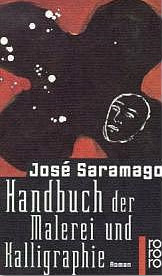
Der Maler H. übt noch im Zeitalter der Fotografie die Kunst des Porträts aus. Die von ihm gemalten reichen Köpfe finden Gefallen in den Escolhatagen und Villen Lissabons. Bei einem Routineauftrag gerät er jedoch in eine Krise. Sein Ich sträubt sich dagegen, die Porträts weiter aufzubessern und zu vertuschen, was nicht gezeigt werden soll. Der Roman des inzwischen weltberühmten portugiesischen Erzählers ist kein “Handbuch” im eigentlichen Sinn, sondern eine originelle Meditation über dne künstlerischen Prozeß, über die Probleme des Schreibens, und zugleich ist es, auf einer untergründigen Ebene, ein poetisches und politisches Bekenntnis.
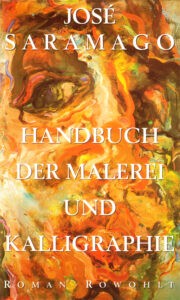
Der Maler H. übt noch im Zeitalter der Fotografie die Kunst des Porträts aus. Die von ihm gemalten reichen Köpfe finden Gefallen in den Escolhatagen und Villen Lissabons. Bei einem Routineauftrag gerät er jedoch in eine Krise. Sein Ich sträubt sich dagegen, die Porträts weiter aufzubessern und zu vertuschen, was nicht gezeigt werden soll. Der Roman des inzwischen weltberühmten portugiesischen Erzählers ist kein “Handbuch” im eigentlichen Sinn, sondern eine originelle Meditation über dne künstlerischen Prozeß, über die Probleme des Schreibens, und zugleich ist es, auf einer untergründigen Ebene, ein poetisches und politisches Bekenntnis.
Der Maler H. übt noch im Zeitalter der Fotografie die Kunst des Porträts aus. Die von ihm gemalten reichen Köpfe finden Gefallen in den Escolhatagen und Villen Lissabons. Bei einem Routineauftrag gerät er jedoch in eine Krise. Sein Ich sträubt sich dagegen, die Porträts weiter aufzubessern und zu vertuschen, was nicht gezeigt werden soll. Der Roman des inzwischen weltberühmten portugiesischen Erzählers ist kein “Handbuch” im eigentlichen Sinn, sondern eine originelle Meditation über dne künstlerischen Prozeß, über die Probleme des Schreibens, und zugleich ist es, auf einer untergründigen Ebene, ein poetisches und politisches Bekenntnis.
Argentina
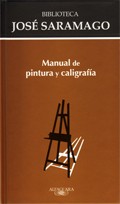
Alfaguara
2010 (Translated by Basilio Losada)
Language
Spanish
A mediocre painter, painfully aware of his limitations, H. resorts to the pages of a diary as a means to understand his aesthetic weaknesses and to understand himself, when he accepts the task of portraying S., administrator of a company. Entranced in a network of banal human relationships and casual and predictable adventures, H. feels it need to paint a second portrait of S., starting to question himself about the meaning of his art, of his relationships with his friends and his lover, about the meaning of his own life without history. The work of these portraits is situated both at the heart of the artist's moral crisis and at the root of every act of aesthetic creation. Set in Portugal immediately prior to the Revolución de los Claveles, Manual de Pintura y Caligrafía is a reflection on art and writing. The commitment of the citizen, the ethics of the intellectual and the love of men are the ingredients that articulate this first novel by José Saramago.
Bangladesh
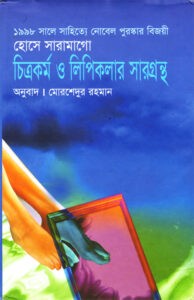
Sandesh
2007
Language
Bengali
Sandesh
2007
Brazil
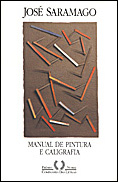
The Painting and Calligraphy Manual dates from 1977, therefore predating works such as Raised from the Ground, Memorial do Convento, The Year of the Death of Ricardo Reis, and others that established José Saramago as one of the best-known writers of contemporary Portuguese fiction. The Manual is a novel, although, as the name suggests, it is also a treatise, in the sense of medieval pedagogy, in the good sense of Rousseau's works, and in the best sense of Pessoa's pretense, that art is made of imitating the world through painting, painting through language, language through the world… “I observe myself writing as I have never observed myself painting, and I discover what is fascinating in this act: in painting, there always comes a moment when the canvas cannot bear even one more brushstroke (good or bad, it will make it worse), whereas these lines can extend infinitely, aligning parts of a sum that will never be begun, but which, in that alignment, is already perfect work, already a definitive work because it is known. It is above all the idea of infinite extension that fascinates me. I can always write, until the end of my life, whereas paintings, closed in on themselves, repel, they are themselves isolated in their skin, authoritarian, and, also, insolent.”
Spain
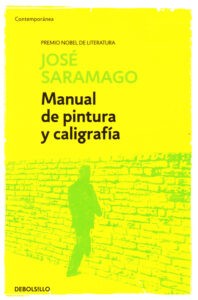
Alfaguara / Penguin Random House
2015 (DeBolsillo — Contemporary) (Trans.: Basilio Losada)
Language
Spanish
A mediocre painter, painfully aware of his imitations, H. turns to the pages of a diary as a means to understand his aesthetic weaknesses and to understand himself, when he accepts the task of portraying S., administrator of a company.
Entangled in a network of banal human relationships and casual and predictable adventures, H. feels the need to paint a second portrait of S., beginning to question himself about the meaning of his art, of his relationships with his friends and his lover, about the meaning of his own life without history.
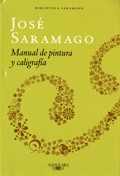
Alfaguara / Penguin Random House
2011 (Saramago Library Collection) (Translated by Basilio Losada)
Language
Spanish
A mediocre painter, painfully aware of his imitations, H. turns to the pages of a diary as a means to understand his aesthetic weaknesses and to understand himself, when he accepts the task of portraying S., administrator of a company.
Entangled in a network of banal human relationships and casual and predictable adventures, H. feels the need to paint a second portrait of S., beginning to question himself about the meaning of his art, of his relationships with his friends and his lover, about the meaning of his own life without history.
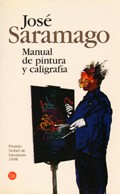
Alfaguara / Penguin Random House
1998; 2007 (Punto de lectura – paperback edition) (Translated by Basilio Losada)
Language
Spanish
A mediocre painter, painfully aware of his imitations, H. turns to the pages of a diary as a means to understand his aesthetic weaknesses and to understand himself, when he accepts the task of portraying S., administrator of a company.
Entangled in a network of banal human relationships and casual and predictable adventures, H. feels the need to paint a second portrait of S., beginning to question himself about the meaning of his art, of his relationships with his friends and his lover, about the meaning of his own life without history.
USA
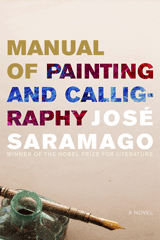
Manual of Painting and Calligraphy was José Saramago's first novel. Written eight years before the critically acclaimed Baltasar and Blimunda, it is a story of self-discovery set against the background of the last years of Salazar's dictatorship. A struggling young artist, commissioned to paint a portrait of an influential industrialist, learns in the process about himself and the world around him. The brilliant juxtaposition of a passionate love story and the crisis of a nation foreshadows all of Saramago's major works. A must-have for any devotee of the great Portuguese Nobel laureate, Manual of Painting and Calligraphy is available in the United States for the first time.
France
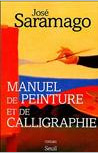
H., peintre conventionnel et sans véritable talent, is chargé de faire le portrait de S., directeur d'une grande entreprise. Conscious of its limits, souffrant of the medium criterion of its toiles et of the banality of life, H décide of s'interroger sur le sens de son existence et sur celui de son art. Pour cell, I begin to execute the secret of my studio a second portrait of S. et, parallel, decides to create a journal. Peu à peu, il découvrira qu'en peignant un autre c'est lui-même qu'il peint et qu'en voulant mieux se connaître à travers l'écriture c'est vers l'art que celle-ci le conduit. This roman, published in 1983, contains in germ quelques-uns des grands thèmes chers à José Saramago: mediumcrité de la vie quotidienne, crisis morale et engagement de l'artiste, interrogation sur l'existence de Dieu, quéte et dépassement de soi. Le journal de H., enlacent inséparable la vie d'un homme de son œuvre dans un constant va-et-vient entre réalité et fonction, mensonge et vérité, nous offre un des plus beaux romans sur les rapports entre l vie et l'art, l'éthique et l'esthétique.
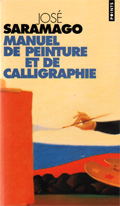
H., peintre conventionnel et sans véritable talent, is chargé de faire le portrait de S., directeur d'une grande entreprise. Conscious of its limits, souffrant of the medium criterion of its toiles et of the banality of life, H décide of s'interroger sur le sens de son existence et sur celui de son art. Pour cell, I begin to execute the secret of my studio a second portrait of S. et, parallel, decides to create a journal. Peu à peu, il découvrira qu'en peignant un autre c'est lui-même qu'il peint et qu'en voulant mieux se connaître à travers l'écriture c'est vers l'art que celle-ci le conduit. This roman, published in 1983, contains in germ quelques-uns des grands thèmes chers à José Saramago: mediumcrité de la vie quotidienne, crisis morale et engagement de l'artiste, interrogation sur l'existence de Dieu, quéte et dépassement de soi. Le journal de H., enlacent inséparable la vie d'un homme de son œuvre dans un constant va-et-vient entre réalité et fonction, mensonge et vérité, nous offre un des plus beaux romans sur les rapports entre l vie et l'art, l'éthique et l'esthétique.
Italy
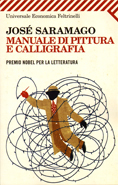
The voice of the narrator is a pittore that we know only for his initial one, H. (as well as the antagonist, S., and his mother, M.), deprived of qualified talent, an official author who enters into crisis finally understanding that his voice is not an “art” in a form of schiavitù at the potere. From that moment on, the writing – and even the calligraphy – began to be transmitted as thinly as possible through the painting. In the migration of a form of art all'altra, from the pittura to the calligraphy, from the image to the verbal representation, if it snoda the story of the crisis in one way and in one country, a path that symbolically concludes the giorno of the definitive collapse of the Portoghese fascist regime. An autobiography, a novel formed by Portogallo and l'amatissima Italia, a journey through the rinascita of a youth, an artist and a nation.
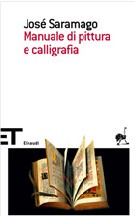
Einaudi
2003 (paperback edition) (Translated by Rita Desti)
Language
Italian
«The Manual for Painting and Calligraphy is probably a book of learning; But I can't wait to see my first autobiographical book… I wrote it in 1976, and I saw it now and again in the previous year of the April 1974 Rivoluzione. José Saramago
UK
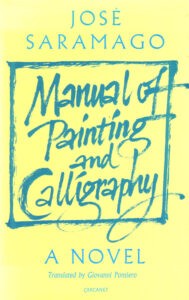
Carcanet
1992 (Trans.: Giovanni Pontiero)
Language
English
The last years of Salazar's dictatorship provide a backdrop for The Manual of Painting and Calligraphy. The story is told by H, a second-rate artist commissioned by a wealthy client to paint a family portrait. As he works, he reflects on his struggle to survive in a bourgeois world obsessed with status and affluence. His portrait focuses animosity, his sitters are left uncomfortably exposed. The novel explores wider issues: the functions of art and literature; the critic's role; and, in H's tour of Italian galleries, a meditation on the influences shaping western culture. Back in Portugal, H is embroiled in political fear and mistrust when a friend is arrested by the secret police. He falls in love, too, and by the end of the story defines his goals and achieves an inner freedom. This coincides with the Portuguese Revolution of 1974 and Salazar's overthrow.
Poland
Niezwykła powieść autobiograficzna, która uważnemu czytelnikowi pomoże pełniej zrozumieć pźniejszą twórczość Jose Saramago
Lizbona, druga połowa lat sześćdziesiątych XX w. H. malarz portrecista, który do tej pory żył z uwieczniania na płótnie wizerunków bogatych mieszczan, przeżywa kryzys twórczy. Dociera do niego, że tego, co do tej pory robił, nie można nazwać sztuką, a całe jego życie musi zostać przewartościowane. Sięga więc po pióro, by przelać na papier swoje rozważania na temat malarstwa i literatury oraz wspomnienia z podróży do Włoch.
O malarstwie i kaligrafii, niezwykła powieść autobiograficzna, jest bardzo ważna w dorobku pisorza. Uważnemu czytelnikowi pomoże ona pełniej zrozumieć pźniejszą jego twórczość, jej walory artystyczne i humanistyczne, a także jej wyszukaną formę.
José Saramago, laureat literackiej Nagrody Nobla z 1998 r. i najpopularniejszy na świecie prozaik portugalski, sławę zdobył dopiero w sześćdziesiątym roku życia swoją trzecią powieścią Baltazar i Blimunda, nagrodzoną prestiżową nagrodą portugalskiego PEN Clubu oraz Nagrodą Literacką Miasta Lizbona.
Nakładem Domu Wydawniczego REBIS ukazały się dotychczas: Baltazar i Blimunda, Wszystkie imiona, Rok śmierci Ricarda Reisa, Kamienna tratwa, Historia oblężenia Lizbony oraz Miasto ślepców i Miasto białych kart.
Jose Saramago zmarł 18 czerwca 2010 roku.
Romania
Manual de pictura si caligrafie este romanul de debut al lui Jose Saramago, published in 1977, nucleul din care se vor decvolta capodoperele ulterioare ale scriitorului portughez, laureat al Premiului Nobel pentru Literatura, 1998. Protagonistul romanului Manual de pictura si caligrafie este un pictor mediocru, desemnat prin initiala H., care primeste commande de a face portretul lui S., directorul unei mari companii. Dureros de constient de propriele limite, H. reurge la paginile unui jurnal ca mijloc de-si analiza slabiciunile estetice si de a se intelege pe sine insusi, descoperind astfel ca simte nevoia sa picteze si un al doilea portret al lui S. Munca la respectivele portrete, cel academic, pictat in modul consecrated si instituit de normele comenzii, if it is realized as intended, nefinalizata, de a pega imaginea „adevaratului S.”, punishes in discussion insusi fundamentul actului de creatie aesthetica. The people are fascinating, tenfold on a favorite theme with Lui Saramago: he relates something real to his artistic representation.
„Manual de pictura si calligrafie emboreaza reflexivatea di dimensiune explicita discursului, prezentind o serie de caracteristici typical modernista. transpunerea «realului» in varii discursuri (pictura si scris) si illuzia mimesis-ului (portretul si autobiografia). (Mioara Caragea)
„Saramago nu este un auteur care submineaza diverse formule literare dintr-o simpla intentie ludica sa su vocatie a gratuitului. total, intr-o insurre de a surprinde viitorul posibil.” (Luis de Sousa Rebelo)
Serbia
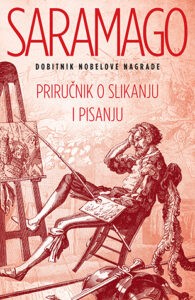
Ovim Romanom, Napisanim u Svojoj 55. najplodnijih spisateljskih avantura u svetskoj književnosti s kraja XX i početka XXI veka po snazi piščevih uvida, poruka i opomena i osobenosti njegovog stila.
Radnja smeštena u poslednju godinu Salazarove diktature u Portugaliji prati dnevničke zapise slikara H., koga je bogati klijent pogodio da naslika porodični portret. Dok slika ulepšan portret, H. razmišlja o svetu opsednutom statusom i bogatstvom, au tajnosti slika drugi, pravi portret, na kojem ne skriva mane modela. Istovremeno u svojim vežbama autobiografije ispituje sopstvena umetnička ograničenja, istražuje smisao i ulogu umetnosti i književnosti, mesto kritičara i uticaje koji oblikuju zapadnu kulturu. Po obilasku Italije tragovima renesansnih majstora uspostavlja svoja prava umetnička i etička merila i postiže unutarnju slobodu, ali po povratku u Portugaliju upliće se, s jedne strane, u vrtlog straha i nepoverenja prema režimu kad tajna policija uhapsi njegovog prijatelja i, s druge, u strastvenu ljubavnu vezu…
„Priručnik o slikanju i pisonju jedinstveno je delo u žanru autobiografske književnosti koje nam pritom nudi klicu ideja i rukopisa Saramagove proze u celini. vremena svakodnevnog života u turbulentnim istorijskim okolnostima, što se u ovom romanu pretvara u suštinu same umetnosti.“ Luis de Soza Rebelo
Turkey
Nobel ödüllü Portekizli yazar José Saramago'nun ilk romanı olan Ressamın Elkitabı, yazarın bütün edebiyat yaşamının temellerini oluşturacak kimi temların tohumlarını içinde barındırıyor: Günlük yaşamın sıradanlığı, ahlaksal kriz, sanatçının toplumla ilişkisi, bireysel ve toplumsal baskı, Tanrı'nın varlığı üzerine düşünme, kendini sorgulama ve aşma. Siparişle çalışan yeteneksiz ressam H., bir işletmenin yöneticisi olan S.'nin portresini yapma görevini üstlenir. H., yeteneksizliğinin bilincindedir, üstelik tablolarının ve yaşamının sıradanlığından da acı duymaktadır. Aldığı işi bitirmeye çalışırken, yaşamını ve sanatının amacını sorgulama ihtiyacı duyar. Bu amaçla atölyesinde gizlice S.'nin ikinci bir portresini yapmaya, buna koşut olarak da 'günlük' tutmaya başlar. Ülke siyasal çalkantılarla alt üst olurken H., kendi küçük dünyasında kendi sıkıntılarını yaşamaktadır. Olayların beklenmedik düğümlere kaydığı Ressamın Elkitabı, hayat, sanat, siyaset, aşk, kentler, görüntüler ve gerçekler üzerine bir denemeler bütünü olarak da düşünülebilir. Jose Saramago güzel metinlerden birini sunuyor.