The Notes
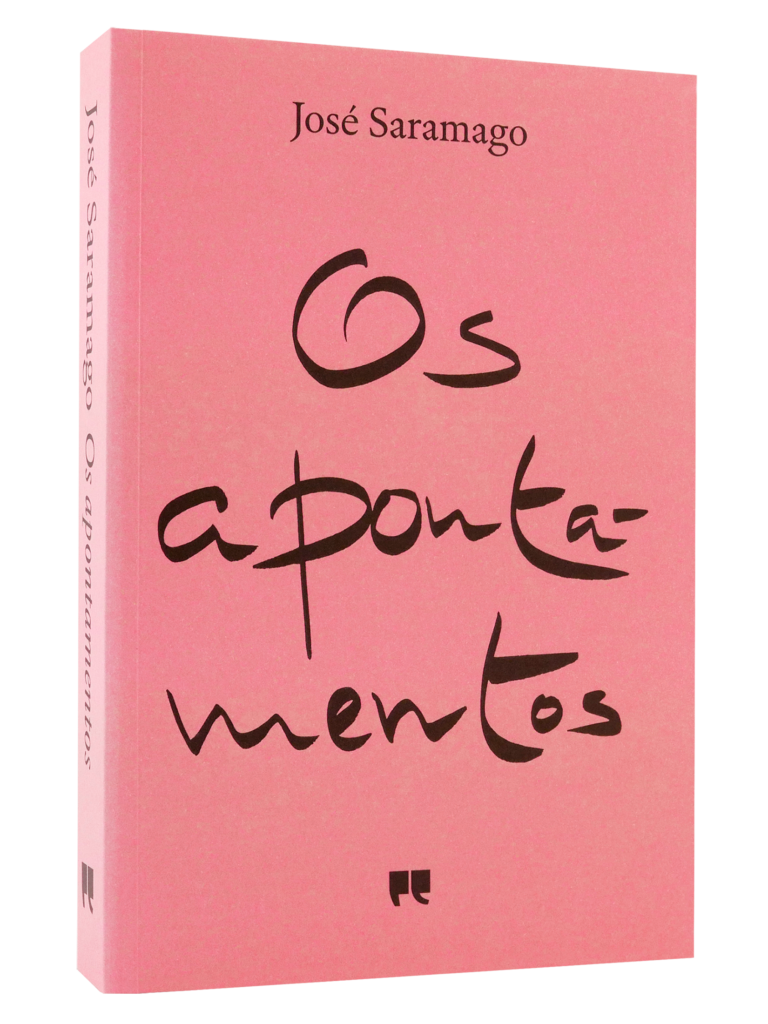
One thing I can't forget too: the influence that the circumstantial had on my work. Four books – two of chronicles and two of political commentaries or essays – are, to a different degree, the product of circumstance, of civic engagement. And perhaps it is true that in the whole of a work that was born without a preconceived project, there is, after all, a coherence that is not only ideological, but also one of style, of presence in the world
Foundation
Portugal
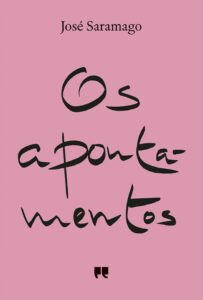
The calligraphy on the cover is by actress and director Maria do Céu Guerra.
Editorials from Diário de Notícias and columns published in Diário de Lisboa, where Saramago emphasizes: "Amidst so many words, I find only two that I would gladly erase if it weren't for the scruple of protecting my own respect. It is when, time and again, I speak of 'revolutionary journalists'. As if the naiveté of imagining them that way weren't enough, I even fell into the presumption of including myself in the group. My illusion, our illusion."«
In *Notes*, we can follow Saramago's perspective, particularly on "emigrants, today and always"; "the French returning from their voyages"; "the rules of coexistence"; "euphemism as politics," or "the renegade resistance." The language and all of Portuguese literature have gained something. It's a way to understand, in some depth, the militant side of José Saramago, which emerges quite clearly here, unlike in his fictional works, where political convictions, although present, appear in a much more diluted form. It allows us to discover the phase in which José Saramago warned of the dangers of fascism and the virtues of socialism.
Diário de Notícias, October 9, 1998
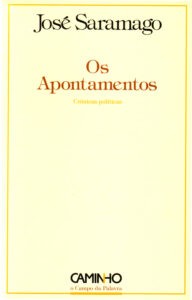
Editorial Path
1990, 3rd ed.
Language
Portuguese
«Editorials from DN and chronicles published in “Diário de Lisboa”, where Saramago underlines: “Amidst so many words, I find only two that I would gladly erase if it weren't for the scruple of protecting my own respect. It is when, again and again, I speak of 'revolutionary journalists'. As if the naiveté of imagining them that way wasn't enough, I even fell into the presumption of including myself in the group. My illusion, our illusion.‘ In ’Notes”, Saramago's perspective, notably, on “emigrants, today and always”; “the French returning from their voyages”; “the rules of coexistence”; “euphemism as politics”, or “the renegade resistance”. The language and all of Portuguese literature have gained something. A way to know in some depth the militant side of José Saramago, which here emerges quite clearly, unlike his works of fiction, where political convictions, although present, appear in a much more diluted way. To discover the phase in which José Saramago warned of the dangers of fascism and the virtues of socialism.“ (Diário de Notícias, October 9, 1998)
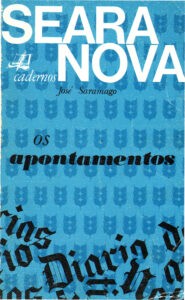
Seara Nova
1976, 1990
Language
Portuguese
Seara Nova
1976, 1990