Probably Joy
I had no illusions; my poetry is what it is, clean, honest, and at some point it may have been something more than that, but in the end, I won't go down in history as a poet. I suppose that if I do go down in history, it will be as a novelist who also wrote some verses.
Foundation
Portugal
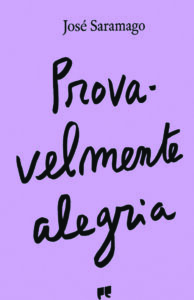
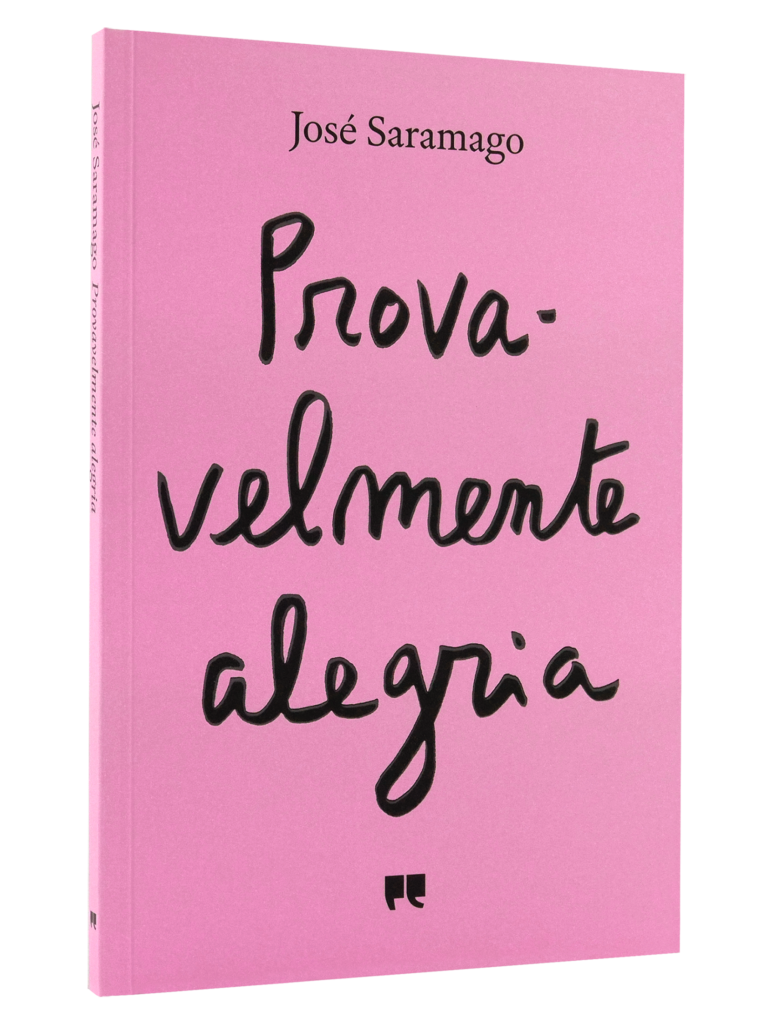
The calligraphy on the cover is by the writer Nuno Júdice
Saramago's second poetic onslaught comes four years after Os Poemas Possíveis. They are poems of shadow and light, intertwined, of an elaboration made through their own reverse, simultaneously of sea and darkness. «Slowly, I go down among corals. / I open, I dissolve the body: my fountains / Of white waters, secret, gathered / In the dew of hidden roses.»
Innovative poems at the time, marked by love said-written in brief, imprecise transparencies, and a certain bitterness-sadness very Portuguese, in their clearly lyrical roots. Passion seems to overcome militancy: «White is your chest, or under your golden skin? / And the sharp crystals, or crimped roses / How light are signs in the fortune of the breast? / What soft strawberries, what an unconforming thirst, / What vertigo on the towering dunes / When the wind of blood bends the waters / And in whiteness we sail, dead of gold.» And eroticism makes its decisive appearance in verse: «Your body of land and water / Where the keel of my boat / Where the ploughshare / They open routes and a path.»
Diário de Notícias, October 9, 1998
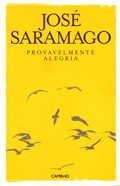
Editorial Path
1985, 6th ed., 2011
Language
Portuguese
«"Each of us is, for now, life. That is enough for us." - José Saramago
«"Saramago's second poetic endeavor emerges four years after 'Os Poemas Possíveis' (The Possible Poems). They are poems of shadow and light, intertwined, an elaboration made through their own reverse side, simultaneously of sea and darkness. 'Slowly, I descend among corals. / I open, I dissolve my body: my sources / Of white, secret waters, gathered / To the dew of hidden roses.' Poems that were innovative at the time, marked by love spoken and written in brief, imprecise transparencies, and a certain bitterness-sadness that is distinctly Portuguese, at its clearly lyrical root." Passion seems to prevail over militancy: “White is your breast, or golden beneath the skin? / And the sharp crystals, or ruffled roses / Like burning signs in the fortune of the breast? / What soft strawberries, what unquenchable thirst, / What vertigo on the rising dunes / When the wind of blood bends the waters / And in whiteness we sail, dead of gold.” And eroticism makes its decisive appearance in verse: ”Your body of earth and water / Where the keel of my boat / Where the plowshare of the plow / Open routes and paths.““ (Diário de Notícias, October 9, 1998)
Editorial Path
1985, 6th ed., 2011
Language
Portuguese
«"Each of us is, for now, life. That is enough for us." - José Saramago
«"Saramago's second poetic endeavor emerges four years after 'Os Poemas Possíveis' (The Possible Poems). They are poems of shadow and light, intertwined, an elaboration made through their own reverse side, simultaneously of sea and darkness. 'Slowly, I descend among corals. / I open, I dissolve my body: my sources / Of white, secret waters, gathered / To the dew of hidden roses.' Poems that were innovative at the time, marked by love spoken and written in brief, imprecise transparencies, and a certain bitterness-sadness that is distinctly Portuguese, at its clearly lyrical root." Passion seems to prevail over militancy: “White is your breast, or golden beneath the skin? / And the sharp crystals, or ruffled roses / Like burning signs in the fortune of the breast? / What soft strawberries, what unquenchable thirst, / What vertigo on the rising dunes / When the wind of blood bends the waters / And in whiteness we sail, dead of gold.” And eroticism makes its decisive appearance in verse: ”Your body of earth and water / Where the keel of my boat / Where the plowshare of the plow / Open routes and paths.““ (Diário de Notícias, October 9, 1998)
Germany
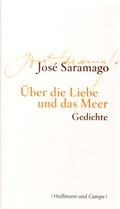
2011 (Translated by Niki Graça)
(included in the work Über die Liebe und das Meer)
Language
German
Mag sein, die Welt gäbe es nicht, wenn ihr unsere Liebe fehlte.
»Die literarische Stimme Portugals.« Der Spiegel
2011 (Audiobook – Voice: Torsten Enge)
(included in the work Über die Liebe und das Meer)
Language
German
Die Gedichte des Nobelpreisträgers erstmals auf Deutsch José Saramago ist vor allem als Roman- und Prosaschriftsteller bekannt, obwohl er schon immer auch Lyrik verfasst hat. Die Liebe und das Meer, zwei wiederkehrende Motive in seinen Gedichten, wurden zum Motto dieser Auswahl.
»Die literarische Stimme Portugals.« Der Spiegel
Argentina
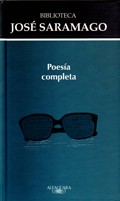
2010 (Trans.: Ángel Campos Pámpano)
(included in the Complete Poesía work)
Language
Spanish
«"Let's close this door.".
Slowly, slowly, in our caigan clothes
As if they were undressing themselves.
And we are what we are, even if we are human.»
Foundation
This volume brings together, in a bilingual edition, all the poetry produced by the 1998 Nobel Prize winner for Literature: from the first poems written to the twenty-first year to the book The Year of 1993, published in 1975, a volume that contains themes and obsessions that became the spinal column of his novelistic work.
Philosophical poems, love poems about literary characters and about the contemporary world, in all of them the identity of this maestro of universal literature is discovered.
Spain
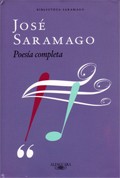
2005; 2011 (Saramago Library Collection) (Translated by: Ángel Campos Pámpano)
(included in the Complete Poesía work)
Language
Spanish
Let's close this door.
Slowly, slowly, in our caigan clothes
As if they were undressing themselves.
And we are what we are, even if we are human.
Foundation
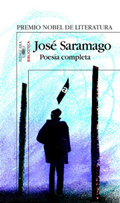
2005; 2011 (Saramago Library Collection) (Translated by: Ángel Campos Pámpano)
(included in the Complete Poesía work)
Language
Spanish
Let's close this door.
Slowly, slowly, in our caigan clothes
As if they were undressing themselves.
And we are what we are, even if we are human.
Foundation
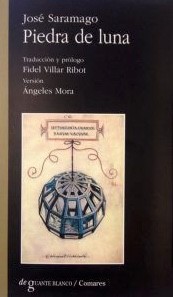
1999 (Translated by Fidel Villar Ribot) (included in the work Piedra de luna — 60 poems and 9 chronicles)
Language
Spanish
A selection of chronicles from This World and the Other: “The Words”, “The City”, “The Resistant Word”, “The Stone Eyes”, “The Gods Sell What They Give”, “My Grandfather, Too”, “Heart and Moon”, “A Leap in Time”, “Discourse Against Lyricism”.
Selection of poems from *Provavelmente Alegria*: “The poem is a granite cube”, “The first poem”, “Forge”, “Vow”, “The kiss”, “The words of love”, “I travel in your body”, “Where”, “White nights”, “The fruit”, “The silence is so deep”, “We walked on the waters”, “Blue water”, “Heart stone”, “Poem for Luís de Camões”, “On the island sometimes inhabited”, “It is a book of good faith”, “Madrigal”.
Selection of poems from The Possible Poems: “Ritual”, “The words are new”, “Question of words”, “Eloquence”, “Circus”, “Beach”, “Art of loving”, ”State of Nudity”, “Integral”, “Military exercise”, “Letter from José to José”, “To you I return, sea”, “To the gods without faithful”, “Speak for me, silence”, “Rule”, “Creation”, “In the silence of the eyes”, “We will not say mortal words”, “Clean hands”, “From me to the star”, “Sign of Scorpio”, “Declaration”, “Pride of D. João in Hell”, “Lament of D. João in Hell”, “Sarcasm of D. João in Hell”, “Romeo and Juliet”, “Juliet and Romeo”, “West side story”, “Don Quixote”, “Sancho”, “Dulcinea”, “Epitaph for Luís de Camões”, “I raise a rose”, "Fraternity," "Program," "Destiny," "Commonplace for a forty-year-old," "Poem with a closed mouth," "Psalm 136," "For time does not stop," "If I have no other voice," "Business.".
Italy
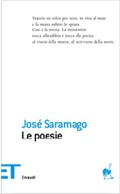
Einaudi
1996 (Translated by Fernanda Toriello)
(included in the works Poesie and Le Poesie)
Language
Italian
«Piú che le parole e le immagini… ci vengono incontro le espressioni di chi ben sa di essere Poet e che può affermare che solo gli occhi del Poet Podeno Riscattare e Accendere di nuovi significati, fin a farne una 'lingua dell'altro mondo', le parole piú semplici e quotidiane‘.
Luciana Stegagno Picchio
This volume presents the due conclusion of the poetry of the Nobel Prize for Literature 1998: Possible Poems and Probably Joy. Il cousin, Le poesie possibili, came pubblicato in 1966, ma poi rivista and amended in 1982, tentatively, on the part of the «romanziere di oggi», di «grattare con unghia secca e ironica il Poet di Ieri». The second, probably happy, is the beginning of the 1970s, and will not rise to the same sensibility until now. Ed is a poetic opera that, splendidly, merits a long and successful visit to the light of the great narrative production of the successive period in the beginning, from the Handbook of painting and calligraphy, from 1977, to a recent peak.
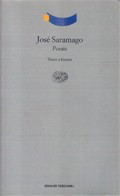
Einaudi
1996 (Translated by Fernanda Toriello)
(included in the works Poesie and Le Poesie)
Language
Italian
«Piú che le parole e le immagini… ci vengono incontro le espressioni di chi ben sa di essere Poet e che può affermare che solo gli occhi del Poet Podeno Riscattare e Accendere di nuovi significati, fin a farne una 'lingua dell'altro mondo', le parole piú semplici e quotidiane‘.
Luciana Stegagno Picchio
This volume presents the due conclusion of the poetry of the Nobel Prize for Literature 1998: Possible Poems and Probably Joy. Il cousin, Le poesie possibili, came pubblicato in 1966, ma poi rivista and amended in 1982, tentatively, on the part of the «romanziere di oggi», di «grattare con unghia secca e ironica il Poet di Ieri». The second, probably happy, is the beginning of the 1970s, and will not rise to the same sensibility until now. Ed is a poetic opera that, splendidly, merits a long and successful visit to the light of the great narrative production of the successive period in the beginning, from the Handbook of painting and calligraphy, from 1977, to a recent peak.
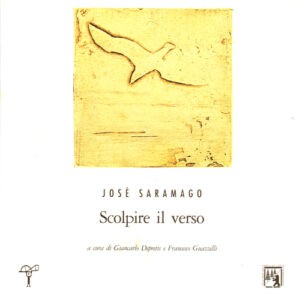
Mauro Baroni editor & Edizioni dell'Orso
2002
(included in the work Scolpire il verso)
Language
Italian
Curated by Giancarlo Depretis and Francesco Guazzelli
With illustrations by David de Almeida