The notebook
They told me that they have reserved a space for me on the blog and that I should write for it, whatever it is, comments, reflections, simple opinions about this and that, in short, whatever comes to be scythe
Foundation
Portugal
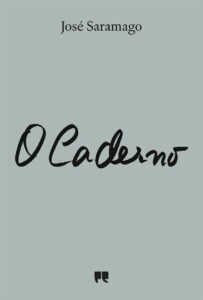
The calligraphy on the cover is by the writer João de Melo
(in one volume with O Caderno 2 — includes the chronicles of José Saramago's blog from September 2008 to November 2009).
Preface by Umberto Eco, originally published in the Italian edition of O Caderno with the chanela by Bollati Boninghieri, 2009.
“They told me they've reserved a space for me on the blog and that I should write to him, whatever, comments, reflections, simple opinions about this and that, in short, whatever comes to be like a sickle. This work brings together a set of daily texts marked out temporarily between September 2008 and November 2009. It represents reflections, opinions, suggestions, criticisms of the most diverse subjects and on the most diverse issues. A work under construction that includes Saramago's daily articles published on the infinite page of the Internet.” José Saramago
“[…] I'm writing this preface because I feel I have some experience in common with my friend Saramago, which is writing books (on the one hand), and, on the other hand, dealing with criticism of customs in a weekly. As the second type of writing is clearer and more informative than the other, many people have asked me if I wouldn't pour broader reflections from the larger books into the small periodic pieces. No, I answer, it teaches me experience (but I believe it teaches it to all who find themselves in a similar situation) which is the impulse of irritation, the satirical hint, the hastily written critical whip, which will then furnish the material for an essay reflection or more developed narrative. It's the daily writing that inspires the most committed works, not the other way around.” Umberto Eco
Co-published by the José Saramago Foundation and Caminho Publishing House.
2009, 2nd ed., 2009
Blog posts from September 2008 to March 2009.
Language
Portuguese
“I was told that a space had been reserved for me on the blog and that I should write for it, whatever I might want: comments, reflections, simple opinions on this and that, in short, whatever comes to mind. This work brings together a collection of daily texts temporally framed between September 2008 and March 2009. It represents reflections, opinions, suggestions, and criticisms on the most diverse subjects and on the most diverse issues. It will be a work in progress that includes Saramago's daily articles published on the infinite page of the Internet.” José Saramago
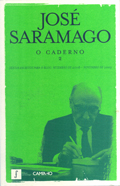
Co-published by the José Saramago Foundation and Caminho Publishing House.
2009
With a prologue by Umberto Eco
Language
Portuguese
This work brings together the collection of texts that José Saramago wrote daily on his blog between March and November 2009. It represents his reflections, opinions, suggestions, and criticisms on a wide variety of subjects and issues.
«[…] I am writing this preface because I feel I share some experience with my friend Saramago, which is that of writing books (on the one hand), and on the other, that of engaging in social criticism in a weekly magazine. Since the second type of writing is clearer and more disseminating than the other, many people have asked me if I don't pour into these short periodicals the broader reflections I make in my larger books. No, I reply, experience teaches me (but I believe it teaches all those who find themselves in a similar situation) that it is the impulse of irritation, the satirical remark, the hastily written critical lash, that will subsequently provide the material for a more developed essayistic or narrative reflection. It is daily writing that inspires the most committed works, and not the other way around.»
Germany
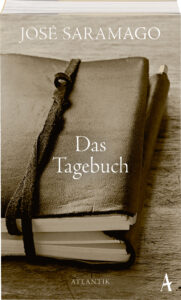
2018 (Trans.: Marianne Gareis and Karin von Schweder-Schreinder)
With a prologue by Umberto Eco
Language
German
In seinem vielbeachteten Blog bezieht Saramago Stellung zu aktuellen politischen und kulturellen Themen, berichtet aber auch über Dinge, die ihn persönlich berühren. Mal laut, zornig und provozierend, mal leise, einfühlsam und mit feiner Ironie – immer regen seine Notizen zum Nachdenken und Mitreden an. Egal, ob es um Obamas Möglichkeiten und Grenzen, um den Papst, die Wirtschaftskrise oder den mutigen Widersacher der italienischen Mafia, Roberto Saviano, geht. Ganz gleich, ob er als Linker die Linke provoziert und vor allem darüber entsetzt ist, dass die Betroffenen nicht einmal reagieren, oder ob er sich mit den Palästinensern solidarisiert und Israel heftig rügt, ob er über Pessoa, Borges und Fuentes schreibt oder darüber, dass politische Demokratie nichts wert ist, wenn sie nicht durch eine ökonomische und kulturelle untermauert ist. In seinen Tagebucheinträgen geht Saramago schonungslos ins Gericht mit Politik, Kirche, Kultur und Gesellschaft, schreibt aber auch sehr persönlich über Freundschaft, Liebe und Tod.
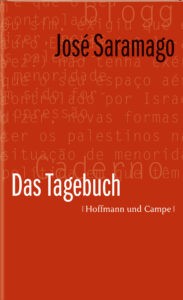
2010 (Trans.: Marianne Gareis and Karin von Schweder)
With a prologue by Umberto Eco
Language
German
In seinem vielbeachteten Blog bezieht Saramago Stellung zu aktuellen politischen und kulturellen Themen, berichtet aber auch über Dinge, die ihn persönlich berühren. Mal laut, zornig und provozierend, mal leise, einfühlsam und mit feiner Ironie – immer regen seine Notizen zum Nachdenken und Mitreden an. Egal, ob es um Obamas Möglichkeiten und Grenzen, um den Papst, die Wirtschaftskrise oder den mutigen Widersacher der italienischen Mafia, Roberto Saviano, geht. Ganz gleich, ob er als Linker die Linke provoziert und vor allem darüber entsetzt ist, dass die Betroffenen nicht einmal reagieren, oder ob er sich mit den Palästinensern solidarisiert und Israel heftig rügt, ob er über Pessoa, Borges und Fuentes schreibt oder darüber, dass politische Demokratie nichts wert ist, wenn sie nicht durch eine ökonomische und kulturelle untermauert ist. In seinen Tagebucheinträgen geht Saramago schonungslos ins Gericht mit Politik, Kirche, Kultur
Brazil
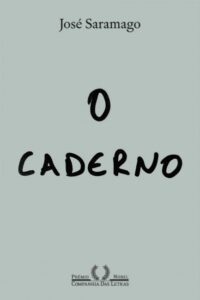
The calligraphy on the cover is by the writer, actor, and director Lázaro Ramos.
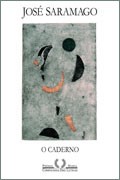
The notebook, a collection of Saramago's texts posted almost daily on his blog between September 2008 and March 2009, is more than a simple collection of journalistic chronicles. It is a life story, an intellectual and sentimental diary of the only Nobel Prize winner for literature in the Portuguese language. On the "blank page of the internet," the author recounts what motivates him, what outrages him, or what appeals to him. He comments on the minute, but also recalls a declaration of love for Lisbon. He speaks of his favorite authors, humorously describing Carlos Fuentes' always impeccably creased trousers, but also the turbulent universe of Jorge Amado's Turks discovering America. He speaks of the Pope, of Garzón, and of Pessoa; of Sigifredo López and Rosa Parks; and of so many peaceful fighters who have managed to change the world or are trying to. And he is moved by people, by friends, by details… It is six months of life recounted in intelligent, yet direct letters, without artifice. But first and foremost, Saramago seems to have found in this undefined place, where perhaps we are all the same, the full and direct realization of something that has always distinguished his work and his public stance: the firm expression of opinions and indignation in the face of injustice. The lucidity, nonconformity, and relevance of these accounts demanded a transformation from the instantaneous nature of the blog in that placid era of books, which is now materialized in this Notebook.
China
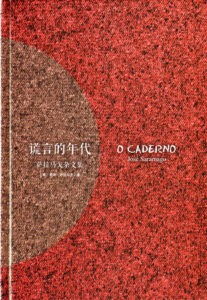
This work brings together a collection of daily texts temporally framed between September 2008 and August 2009.
Croatia
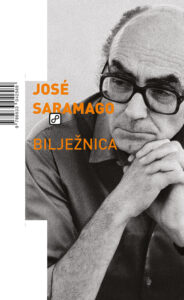
U hrvatskom izdanju “Bilježnice” objavljeni su blogovi koje je dobitnik Nobelove nagrade za književnost José Saramago napisao od rujna 2008. do ožujka 2009.
Provokativno i lirski, na stranicama na kojima se privatno bezmalo uvijek isprepliće s javnim, Saramago precizno bilježi događaje koji su obilježili našu zbilju tijekom tih šest mjeseci. Autor tako odaje počast voljenom gradu Lisabonu, ali prisjeća se i razgovora s prijateljima te omiljenih autor kao što su Fernando Pessoa, Jorge Amado, Carlos Fuentes i Jorge Luis Borges. S karakterističnom oštrinom i beskompromisnošću, osvrće se na aktualne društvene teme kao što su svjetska financijska kriza, izraelska blokada Gaze te američki predsjednički izbori. Na meti su mu se našli mnogi političari: “omiljeni” mu bivši američki predsjednik George W. Bush, talijanski premijer Silvio Berlusconi, bivši španjolski premijer José María Aznar te francuski predsjednik Nicolas Sarkozy.
Talijanska izdavačka kuća Einaudi, inače u vlasništvu Silvija Berlusconija, čak je odbila tiskati prijevod “Bilježnice” zbog svega što se u njoj govori o talijanskom premijeru. Saramagove kritičke oštrice nije pošteđena ni Katolička crkva, kao ni sâm papa Benedikt XVI. Kao i uvijek, autorove simpatije na strani su potlačenih i obespravljenih: sa sebi svojstvenom toplinom i humanošću, Saramago progovara u ime zlostavljanih žena, afričkih immigranata kojima je Europa obećana zemlja te “malih” ljudi koji su u financijskoj krizi izgubili sve što su imali.
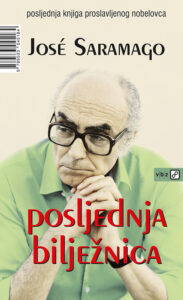
Posljednja knjiga proslavljenog nobelovca
Nobelovac José Saramago ni u poznoj se, takozvanoj trećoj životnoj dobi, nije odrekao tri konstante koje su presudno obilježile njegov literarni i ljudski put. Prva je dirljiva posvećenost lijepoj književnosti, druga beskompromisni društveni angažman, a treća nezaustavljivi, eksplozivni vitaliam koji mu ni u najtežim trenucima nije dao posustati.
Uvijek u koraku s vremenom i njegovim izazovima, Saramago usvaja tehnologije i medije dvadeset i prvog stoljeća te se otiskuje u bloggersku avanturu. Poštujući format i recepcijsku logiku medija, njegovi su tekstovi kratki, izravni, vezani uglavnom uz aktualna politička i kulturna zbivanja – no zato ništa manje literarno zavodljivi. Okupljene u knjigu Bilježnica, te su britke kritike neoliberalnog poretka, klerikalizma i nacionalizma, posvete značajnim umjetnicima i opusima te dosljedno zagovaranje pravednijeg, egalitarnog društva kod čitatelja širom svijeta već polučile oduševljenje.
Posljednja bilježnica njihov je smrću zapečaćen nastavak. Pred vama su posljednji tekstovi iz kovačnice ovoga velikog književnog maga – odgovorno uživajte u njima!
Spain
«When in February 1993 we settled in Lanzarote, always keeping our home in Lisbon, my cousins María and Javier, who had lived there for a few years, together with Luis and Juanjo, recently arrived, gave me a notebook to serve as a record of our Canary Islands days. I was only given one condition: that I mentioned them every now and then.
I never wrote anything in such a notebook, but then, in this way, and not for another time, the notebooks of Lanzarote were born, which for five years would see the light. Today, without waiting, I find myself in a similar situation. This time, however, the driving causes are Pilar, Sérgio and Javier, who are responsible for the blog. They told me that there was a space reserved for me on the blog and that I should write comments, reflections, simple opinions about this or that, in the end, which is better and comes in this case. Much more disciplined than what I often seem, I replied that if I was señor, that I would do it, if I was not required for this notebook the assiduity that I myself imposed on others. For so much, and for whatever it's worth, talk to me.» JOSÉ SARAMAGO
«When in February 1993 we settled in Lanzarote, always keeping our home in Lisbon, my cousins María and Javier, who had lived there for a few years, together with Luis and Juanjo, recently arrived, gave me a notebook to serve as a record of our Canary Islands days. I was only given one condition: that I mentioned them every now and then.
I never wrote anything in such a notebook, but then, in this way, and not for another time, the notebooks of Lanzarote were born, which for five years would see the light. Today, without waiting, I find myself in a similar situation. This time, however, the driving causes are Pilar, Sérgio and Javier, who are responsible for the blog. They told me that there was a space reserved for me on the blog and that I should write comments, reflections, simple opinions about this or that, in the end, which is better and comes in this case. Much more disciplined than what I often seem, I replied that if I was señor, that I would do it, if I was not required for this notebook the assiduity that I myself imposed on others. For so much, and for whatever it's worth, talk to me.» JOSÉ SARAMAGO
2012 (Punto de Lectura – with prologue by Pilar del Río) (Trans.: Pilar del Río)
With prologue by Umberto Eco and Pilar del Río
Language
Spanish
«It's time to return to the commitment: the writer has to decide who is and what he thinks.» José Saramago
This is not a sad book, it is not a tronante book, it is, simply, a farewell. Therefore, José Saramago, despite being attentive to the anecdote of the day or the terrible success, despite using humor and irony and employing a background in comradeship, he rescues forgotten texts that are current and leaves us as unexpected gifts, not as a testament, simply intimate gifts that reveal passions and dreams. It takes us to Kafka's world, to Charlot's inevitable sadness, to us describing the superb adventure of crowning the top of the Montaña Blanca, in Lanzarote. This is a book of life, a treasure, a Saramago who speaks to us to tell us that the problem is not justice, but the jueces that administer it in the world. There will be no more notebooks, that oblique gaze to see the reverse of things, the frontal, without ever lowering the head before the power, only to kiss, the irony, the curiosity, the wisdom of those who were not born to tell, keep counting, and with what currentity now that we are not there and so much missing us continues to do so. So are the farewells of men who know that they were born from the ground and that to the ground they return, but hugged to her, with that kind of immortality that offers the ground from which we rise each day, with new experiences incorporated. Those who live are dirt and soil, our sustenance, perhaps our soul.
Pilar del Río
2011 (Translated by Pilar del Río)
With prologue by Umberto Eco and Pilar del Río
Language
Spanish
«It's time to return to the commitment: the writer has to decide who is and what he thinks.» José Saramago
This is not a sad book, it is not a tronante book, it is, simply, a farewell. Therefore, José Saramago, despite being attentive to the anecdote of the day or the terrible success, despite using humor and irony and employing a background in comradeship, he rescues forgotten texts that are current and leaves us as unexpected gifts, not as a testament, simply intimate gifts that reveal passions and dreams. It takes us to Kafka's world, to Charlot's inevitable sadness, to us describing the superb adventure of crowning the top of the Montaña Blanca, in Lanzarote. This is a book of life, a treasure, a Saramago who speaks to us to tell us that the problem is not justice, but the jueces that administer it in the world. There will be no more notebooks, that oblique gaze to see the reverse of things, the frontal, without ever lowering the head before the power, only to kiss, the irony, the curiosity, the wisdom of those who were not born to tell, keep counting, and with what currentity now that we are not there and so much missing us continues to do so. So are the farewells of men who know that they were born from the ground and that to the ground they return, but hugged to her, with that kind of immortality that offers the ground from which we rise each day, with new experiences incorporated. Those who live are dirt and soil, our sustenance, perhaps our soul.
Pilar del Río
The ideas and opinions of the Portuguese Nobel Prize are more critical and explicit than ever, in a collection of texts on different themes of actuality and of personal personal seva.
Counter-covered text
“"When the fever of 1993 we went to settle in Lanzarote, always staying at the house in Lisbon, my cunyats María and Javier, who had lived with some of them ugly, together with Luis and Juanjo, finished arriving, in van to give a notebook that would serve as a record of our canary days. Names could be one condition: that of tant en tant fes esment d'ells.
But I won't write again in a quest quadern, but it will be there, in another way, that will never go to the Quaderns of Lanzarote, that will last five years until they arrive there. Avui, sense waiting for me, suddenly in a semblant situation. Aquest cop, però, les causes motrius Són Pilar, Sergio i Javier, que s'occupen del bloc. In fact, I can say that I reserve a space in the block that I wrote, that I followed, comments, reflections, simple opinions on all things, in fact, that avenged the tomb. The most disciplined del que sovint semblo, els vaig respondre que si, senyor, que ho would semper que no me exigissin per aquest Quadern l'assiduïtat que m'havia imposat a mi mateix per altres. Therefore, for what it was worth, I also completed it. “ José Saramago
«In these writings in Breus Saramago continues to experience the world as it is dissonant, even further from a more serene distance, highlighting the form of poetic morality.
Although there are people who hate, there are also people who love, and here are these affectionate articles dedicated to Pessoa or Amado, to Fuentes, to Federico Mayor, to Chico Buarque de Hollanda, who end up with a five-point aquest writer who sometimes envy their colleagues and their friends and loved ones.
Per no parlar (i aquí es tenuim el return als grans temes de la seva narrative) de quan leapa de l'anàlisi de la quotidianitat als grans temes metafísics, a la realitat ia l'aparença, a la naturalesa de l'esperança, a com solen les coses quan no les miram. Llavors renders Saramago philosophical and narrator on the stage, but he doesn't undertake it without meditation, in uncertainty. Amb tot, you are not displeased when you are enraged. You’re nice.»
Prologue by Umberto Eco
USA
2010; 2011 (Pocket Edition) (Translated by Amanda Hopkinson and Daniel Hahn) (included in The Notebook)
With a prologue by Umberto Eco
Language
English
A unique journey into the personal and political world of the Nobel laureate and author of Blindness
Provocative and lyrical, The Notebook is a record of a year in the life of José Saramago. On the eve of the 2008 US presidential election, the author started jotting down his reflections on the world in which he lives. He evokes life in his beloved city of Lisbon, conversations with friends, and meditations on his favorite authors, often rendered with pointillist detail: precise observations on stories and moments of arresting significance that together comprise an acute view of our times.
Characteristically critical and uncompromising, Saramago dissects the financial crisis, deplores Israel's bombing of Gaza, traces the ongoing inquiry into the execution of the Brazilian Jean Charles de Menezes on the London Underground, and charts the transition from the era of George W. Bush to that of Barack Obama. Available for the first time in English, The Notebook offers a rare glimpse into the mind of one of the most original writers of our time.
Praise for José Saramago:
“The most gifted novelist alive in the world today.” —Harold Bloom
“Saramago is one of Europe's most original and remarkable writers... His writing is imbued with a spirit of comic inquiry, meditative pessimism and a quietly transforming energy that turns the indefinite into the unforgettable.” —Richard Eder, Los Angeles Times
“Saramago is a writer, like Faulkner, so confident of his resources and ultimate destiny that he can bring any improbability to life.” —John Updike, The New Yorker
“"In the craft of the sentence, José Saramago is one of the great originals. His prose is a voice that envelops all voices: it is like the universe's immanent murmur... No one writes quite like Saramago, so solicits and yet so magnificently free." —Steven Poole, Guardian
“I'm hard pressed to think of another writer who makes me stop as Saramago does, to go back and discover the meaning of history or allegory in all its wild newness.” —Julian Evans, Financial Times
France
This is the beginning of an editorial adventure commenced in March 2008, which José Saramago, the Portuguese Nobel Prize for literature, inaugurates his blog, three years later avec ferveur par des lecteurs qui y retrouvent l'intelligence et la lucidité de l'écrivain, mises au service de l'observation sans concession de notre monde actuel.
La politique internationale, Obama, Sarkozy, l'Europe, le conflit israélo-palestinien… les petites et grandes stratégies des puissants de ce monde sont décryptées par l'un des auteurs contemporains les plus engagements, et la force et l'expression de certains portraits ne laissent pas indifferent, poussant même le président du Conseil italien, Silvio Berlusconi, interdire à un éditeur de son groupe de publier l'ouvrage en italien. Il ne s'agit pas ici d'une compilation de chroniques, mais d'un vrai « livre de vie », selon l'expression de l'épouse de José Saramago. An occasion rare de partager une écriture superbe et dense, sans fioritures, ainsi qu'une intelligence du monde à la fois intime et universelle.
Greece
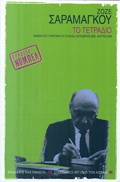
2010 [Trans: Athina Psillia (Αθηνά Ψυλλιά)]
With a prologue by Umberto Eco
Language
Greek
«Περίεργο άτομο αυτός ο Σαραμάγκου. Είναι ογδόντα εφτά χρόνων, με κάποια (λέει ο ίδιος) σοβαρά προβλήματα υγείας, έχει κερδίσει το Νόμπελ, διάκριση που θα του επέτρεπε να μην παράγει πλέον τίποτα, αφού έτσι κι αλλιώς έχά είσοδό του στο Πάνθεον ως τον “πιο ταλαντούχο μυθιστοριογράφο που βρίσκεται ακόμα εν ζωή, έναν από τους τελευταίους τιτάνες ενός λογοτεχνικού γένους υπό εξαφάνιση”), και να τος που αρχίζει να γράφει σε μια ιστοσελίδα επιτιθέμενος λίγο-πολύ στους πάντες, προκαλώντας πολεμικές και αναθέματα από πολλές πλευρές –συνήθως όχι επειδή λέει πράγματα που δεν θα έπρεπε να πει, αλλά επειδή δεν χάνει τον καιρό του για να μετρήσει τα λόγια του– κι ίσως αυτός ακριβώς να ήταν ο σκοπός του…»
(Από τον πρόλογο του Ουμπέρτο Έκο)
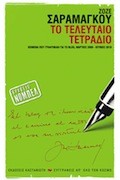
2011 [Trans: Athina Psillia (Αθηνά Ψυλλιά)]
With a prologue by Umberto Eco
Language
Greek
«Θέλω να φαίνεται στα βιβλία μου πως από αυτό τον κόσμο πέρασε (ό,τι αξία κι αν έχει αυτό, σύμφωνοι;) ένας άνθρωπος που λεγόταν Ζοζέ Σαραμάγκου. Θέλω να το μαθαίνει κανείς αυτό στην ανάγνωση των βιβλίων μου – επιθυμώ η ανάγνωση των βιβλίων μου να μην είναι μερικά ακόμα μυθιστορήματα στη λογοτεχνία, alpha το σημάδι ενός ανθρώπου», ανέφερε σε μια παλιά του συνέντευξη ο μεγάλος νομπελίστας συγγραφέας.
Το τελευταίο τετράδιο περιλαμβάνει όλα τα κείμενα που έγραψε ο Ζοζέ Σαραμάγκου για το blog του, από το Μάρτιο του 2009 ως τον Ιούνιο του 2010.
Είναι η τελευταία καταγραφή, σε καθημερινή σχεδόν βάση, της σκέψης του για την ιβηρική και την παγκόσμια επικαιρότητα, για τους θεσμούς και τα πρόσωπα που μας κυβερνούν, για τις αξίες και τους θεσμούς που λείπουν, για τα προσωπικά του σχέδια και τις ματαιώσεις τους, για το όραμα του κόσμου που θα γεννηθεί μέσα από την κρίση.
Netherlands
Nog nooit liet José Saramago ons zo toe in zijn belevingswereld. Met deze bundel weblogs geeft hij een blik in zijn hoofd en in zijn hart. Hij deelde zes maanden lang zijn leven met zijn lezerspubliek door elke dag te bloggen over wat hem motivationerde, wat hem tegenstond, wat hem dwarszat en wat hem verbaasde. Behalve zijn meningen over Bush en Obama, Guantánamo Bay en de paus, vertelt hij over literaire grootheden die hem inspirationerden, zoals Fernando Pessoa en Jorge Amado, en deelt hij zijn observaties over lichtere onderwerpen als de kledingstijl van Carlos Fuentes… Kortom, een boek vol spot, humor en wijsheid.
Italy
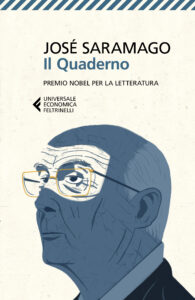
“The blog is illuminating the path of its author. It is its virtue”
“When in February of 1993 I settled in Lanzarote, always keeping the house in Lisbon, I shared with María and Javier, who lived on the same day, I joined Luis and Juangio, from a little way back, I gave a quarter that I could serve to keep appunti on our way to the Canary Islands. We put on a suitable sole: that both faces the suffering of the person.
I didn't write any more about what I fogged up, but it's my own stato così, and not on the other hand, I was born in the Quaderni di Lanzarote, I saw all the light in the arch of 5 years. Oggi, without losing it, I found it in a similar situation. Stavolta, però, causes sleep Pilar, Sérgio and Javier, who occupy the blog. I can't help but see a space on the blog, I can write anything, comment, rifle, always opinion on this question and that, regardless of what my head shoots. Much more discipline as commonly appaia, now risposto loro che, sissignore, I will farò a patto che non si intenda per questo Quaderno l'assiduità che avevo imposed a me stesso per gli altri. Dunque, per quel che può valere, contino pure su di me.” José Saramago
The political, human and literary commentary of José Saramago was written on his blog between 2008 and 2009: from Berlusconi to Jorge Amado, from Bush to Chico Buarque de Hollanda, from Obama to Adolf Eichmann. The comment came at the same time, in its first edition, caused a great scandal in the Italian political and literary environment.
Once upon a time, José Saramago is one of the greatest witnesses of real life. I was written clandestinely by the Communist Party in 1969, during which time Portogallo was a retto dal regime dittatoriale di Salazar, there was no longer any abandonment of political impetus, considering the very condition of writing inscindibile from the coscienza di cittadino. I'm always attentive to the new and interested in the confrontation and dialogue with my audience, but I'm not sure that I'm ready to start digital and almost new to the blog, I've always written everything: from the riflession to the future of the piano there's a purpose for the new millennium, from there a new quality commercial center The catastrophe of consumption towards secularism is the only weapon in confronting the interference of Catholic churches in our daily lives. Tratta di ciò che lo indignado, ma anche di ciò che ama e rispetta. Parla di poetry, di libri, di arti, di valori, e lascia spazio anche a ricordi e riflessioni più personali. This question is the last quarter that Saramago has written, first of all, and from which he left behind an incomprehensible journey in the European and global cultural panorama.
“We lived in a world where we are walking with evil in peggio and we are not useful at all”
Once upon a time, José Saramago is one of the greatest witnesses of real life. I was written clandestinely by the Communist Party in 1969, during which time Portogallo was a retto dal regime dittatoriale di Salazar, there was no longer any abandonment of political impetus, considering the very condition of writing inscindibile from the coscienza di cittadino. I'm always attentive to the new and interested in the confrontation and dialogue with my audience, but I'm not sure that I'm ready to start digital and almost new to the blog, I've always written everything: from the riflession to the future of the piano there's a purpose for the new millennium, from there a new quality commercial center The catastrophe of consumption towards secularism is the only weapon in confronting the interference of Catholic churches in our daily lives. Tratta di ciò che lo indignado, ma anche di ciò che ama e rispetta. Parla di poetry, di libri, di arti, di valori, e lascia spazio anche a ricordi e riflessioni più personali. This question is the last quarter that Saramago has written, first of all, and from which he left behind an incomprehensible journey in the European and global cultural panorama.
“We lived in a world where we are walking with evil in peggio and we are not useful at all”
2009; 2014 (paperback edition) (Translated by Giulia Lanciani)
With a prologue by Umberto Eco
Language
Italian
A Nobel Prize for Literature comes as a companion to travel.
The Quaderno raccoglie interventi that Saramago has written since his residence in Lanzarote from September 2008 to the end of March 2009. Not a novel, not a theatrical opera, not a story of poetry: genre, quest'ultimate, that Saramago says he often frequents little. Eppure, a chi si appresta a leggere queste pagine il dubbio sorgerà: perché di poetry – tra quelle righe fulminee e taglienti, capaci di stilare una spietata cartella diagnostica del nostro presente – ce n'è, eccome. If the scandire il tempo e attare l'urgenza di queste chronache sono gli accadimenti del mondo (dagli ultimi atti della presidenza di George W. Bush alle intemperanze del nostro president del consiglio, dalla crisi finanziaria che ha sconvolto i mercati occidentali alle polemiche su Guantánamo, dalla libertàlimitata di Roberto Saviano there was a recent bombing in Striscia of Gaza), a dream of a moment of real poetry and extraordinary beauty that was contained on this page of the same note in which Obama came to America's eleven, the rich dedication to Fernando Pessoa, the omaggio of the city of Lisbon, the episode of the rite of the Tower of Belém of the statue dell'elefante gives the title to its sweat last novel (Il viaggio dell'elefante, Einaudi, Turin 2009).
And then, come to the sky of Lanzarote, change in achievement, indomitable and unpredictable: the sapient grammar of lyrical prose, which makes the speech ponderate, adagiata at the post, to tenere the rhythm of meditation, all the violent eruption of the sdegno in that invettive against the recent attack on democracy, alla libertà religious e ai diritti umani, cui abbiamo assisto e assistiamo in Europa e oltreoceano, ma soprattutto contro la minaccia alla libertà di espressione, che il Nobel portghese differs from the furore of the scrittore che sotto Salazar ha conosciuto le durezze della censorship. «Un libro di vita», defines Pilar del Rio, its Spanish translation and companion of the vita of the last five years. And un'esortazione a non confondere le utopie con più pallide speranze.
2009; 2014 (paperback edition) (Translated by Giulia Lanciani)
With a prologue by Umberto Eco
Language
Italian
A Nobel Prize for Literature comes as a companion to travel.
The Quaderno raccoglie interventi that Saramago has written since his residence in Lanzarote from September 2008 to the end of March 2009. Not a novel, not a theatrical opera, not a story of poetry: genre, quest'ultimate, that Saramago says he often frequents little. Eppure, a chi si appresta a leggere queste pagine il dubbio sorgerà: perché di poetry – tra quelle righe fulminee e taglienti, capaci di stilare una spietata cartella diagnostica del nostro presente – ce n'è, eccome. If the scandire il tempo e attare l'urgenza di queste chronache sono gli accadimenti del mondo (dagli ultimi atti della presidenza di George W. Bush alle intemperanze del nostro president del consiglio, dalla crisi finanziaria che ha sconvolto i mercati occidentali alle polemiche su Guantánamo, dalla libertàlimitata di Roberto Saviano there was a recent bombing in Striscia of Gaza), a dream of a moment of real poetry and extraordinary beauty that was contained on this page of the same note in which Obama came to America's eleven, the rich dedication to Fernando Pessoa, the omaggio of the city of Lisbon, the episode of the rite of the Tower of Belém of the statue dell'elefante gives the title to its sweat last novel (Il viaggio dell'elefante, Einaudi, Turin 2009).
And then, come to the sky of Lanzarote, change in achievement, indomitable and unpredictable: the sapient grammar of lyrical prose, which makes the speech ponderate, adagiata at the post, to tenere the rhythm of meditation, all the violent eruption of the sdegno in that invettive against the recent attack on democracy, alla libertà religious e ai diritti umani, cui abbiamo assisto e assistiamo in Europa e oltreoceano, ma soprattutto contro la minaccia alla libertà di espressione, che il Nobel portghese differs from the furore of the scrittore che sotto Salazar ha conosciuto le durezze della censorship. «Un libro di vita», defines Pilar del Rio, its Spanish translation and companion of the vita of the last five years. And un'esortazione a non confondere le utopie con più pallide speranze.
UK
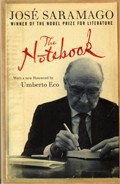
2010 (Translated by Amanda Hopkinson and Daniel Hahn) (included in the work The Notebook)
Language
English
A unique journey into the personal and political world of the Nobel laureate and author of Blindness
Provocative and lyrical, The Notebook is a record of a year in the life of José Saramago. On the eve of the 2008 US presidential election, the author started jotting down his reflections on the world in which he lives. He evokes life in his beloved city of Lisbon, conversations with friends, and meditations on his favorite authors, often rendered with pointillist detail: precise observations on stories and moments of arresting significance that together comprise an acute view of our times.
Characteristically critical and uncompromising, Saramago dissects the financial crisis, deplores Israel's bombing of Gaza, traces the ongoing inquiry into the execution of the Brazilian Jean Charles de Menezes on the London Underground, and charts the transition from the era of George W. Bush to that of Barack Obama. Available for the first time in English, The Notebook offers a rare glimpse into the mind of one of the most original writers of our time.
Praise for José Saramago:
“The most gifted novelist alive in the world today.” —Harold Bloom
“Saramago is one of Europe's most original and remarkable writers... His writing is imbued with a spirit of comic inquiry, meditative pessimism and a quietly transforming energy that turns the indefinite into the unforgettable.” —Richard Eder, Los Angeles Times
“Saramago is a writer, like Faulkner, so confident of his resources and ultimate destiny that he can bring any improbability to life.” —John Updike, The New Yorker
“"In the craft of the sentence, José Saramago is one of the great originals. His prose is a voice that envelops all voices: it is like the universe's immanent murmur... No one writes quite like Saramago, so solicits and yet so magnificently free." —Steven Poole, Guardian
“I'm hard pressed to think of another writer who makes me stop as Saramago does, to go back and discover the meaning of history or allegory in all its wild newness.” —Julian Evans, Financial Times
Romania
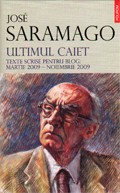
2011 (Translated by Simina Popa – Portuguese – and Lavinia Similaru – Spanish -)
With prologue by Pilar del Río and Umberto Eco
Language
Romanian
Ultimul caiet al lui Jose Saramago reproduce textele scrise pentru blog din martie 2009 si pina in iunie 2010, pe linga alte citeva eseuri din arhiva autorului, „adormite”, cum spune in prologul sau Pilar del Rio, sotia autorului, insa de mare actualitate. Accest prolog, impreuna cu citeva insemnarile din period octombrie 2009 – iunie 2010, reproduse la sfirsitul volumului de fata, au fost preluate din editia spaniola a Ultimului caiet si traduse de Lavinia Similaru, in timp ce corpul volumului respecta editia portugueza, in translation Siminei Popa. Romanesque editia dorit sa cuprinda final cuvinte ale lui Saramago, dictate family, cnd in no more putea sa scrie, insa continua sa observation lumea din jur, as aceeasi vigilenta fata de cauzele sociale, lying in such a controversial policy if religious, continuing literary criticism, constient if fascinating page in last clip.
„As soon as you access this script, Saramago betrayed you in continued experience of light, as a deplorable cum ea, pentru ao revedea apoi de la o distanta mai senina, sub forma moralitatii poetice (iar alteori mai rau decit este – desi poate parea imposibibil sa se ajunga mai departe). Casa sa nu mai vorbim (si iata intoarcerea la marile teme ale operei sale) de momentele in care sare de la analiza cotidianului, la marile chestiuni metafizice, la realitate si aparenta, la natura sperantei, la cum sint lucrurile atunci cind nu ne uitam la ele.” (Umberto Eco)
„Intr-un stil provocator si simplu, dulce-amar, cu divagatii insolite la viata si cartile sale, la idei si povesti, Ultimul caiet este o delectare.” (The Independent)
„Lui Saramago ii face placere sa preia un gind trecator sau un eveniment si sa compuna pe marginea lui, cu indignare in discursurile despre ororile politicii, senin in apprecierile fata de prieteni, rezonabil in memorabilele critiquei la adresa culturii.” (The Times)
Turkey
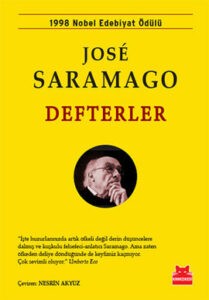
22 Kasım 2007 gecesi, sabahın dördünde 'öldüm' ve yalnızca dokuz saat sonra 'yeniden dirildim.' Tam bir organik çöküş, beden fonksiyonlarında beni hayatın son eşiğine, o vedalar için çok geç olan yere götüren bir duruş. Hiçbir şey hatırlamıyorum. Pilar oradaydı, yengem María da oradaydı, ikisi de, devinimsiz, tüm güçlerin terk ettiği ve ruhu çekilip gitmiş gibi görünen, yaşıyor olmaktan çok çare bulunamaz bir kadavraya dönmüş bir bedenin önünde. O saatlerin nasıl olduğunu bugün bana anlatanlar onlar. Ana, torunum, sonraki günün akşamı geldi. Baba ve büyükbaba, hâlâ kendi solumasının rüzgârıyla tükenmekle tehdit eden bir mumun alevi gibi solgundu. Sonra bedenimin kitaplarla, şöyle söyleyelim, başka çiçeklerle çevrili halde kütüphaneye konulacağını anladım. Kaçtım. Yavaş, çok yavaş bir kendine geliş yılı, doktorların söyledikleri gibi, bana sağlığımı, enerjimi, düşünce çevikliğini geri verdi, bana aynı zamanda evrensel bir çare olan işi de geri verdi. Ölüme değil, yaşama doğru kendi 'Fil Yolculuğumu' yaptım, ve buradayım. Emrinize amade.‘
“Saramago'nun Defterler'i hüzünlü bir kitap değil […] öfkeli bir kitap değil, sadece, bir veda.”
-Pilar del Río (eşi)-
(Tanıtım Bülteninden)
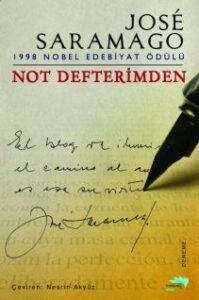
José Saramago kendine özgü üslubu ve politik tavrıyla dünyaya ve hayata bakıyor, düşüncelerini kayda geçiriyor. Neoliberalizmin ve küreselleşmenin iktisadi ve siyasi talanına duyduğu tepki, hayatı ve kişileri çürütmesi, yarattığı ahlaki çöküntü ve tahribat, hemen her yazısında karşımıza nefis bir üslupçunun hoş anlatımıyla çıkıyor, dünyayı bir kez de Saramago'nun blog penceresinden algılıyoruz.
Altı aylık blog yazılarından oluşan Not Defterimden, Saramago'nun eseri ithaf ettiği eşi Pilar del Río'nun deyişiyle, “yapmacıktan uzak, zeki okurlar için zeki notlar” ve yaşadığımız gerçekliğe Saramago'nun ironisiyle bakmak için iyi bir fırsat.
(Tanıtım Bülteninden)