Traveler's Luggage
The chronicles say everything (and probably more than the work that came later) about who I am as a person, my sensibility, my perception of things, my understanding of the world: all of that is in the chronicles.
Foundation
Portugal
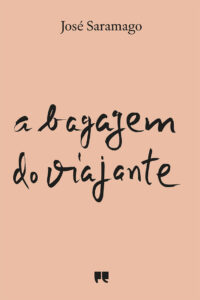
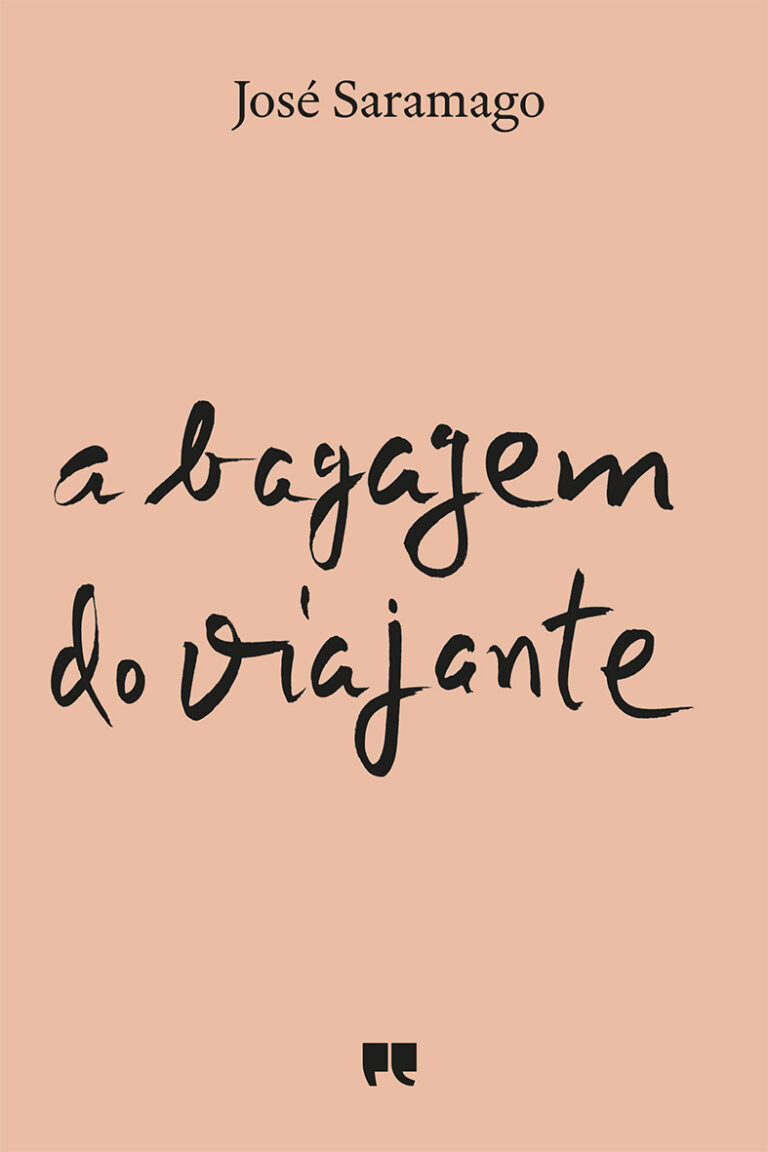
The calligraphy on the cover is by journalist Adelino Gomes.
«A set of chronicles by José Saramago, published for the first time in the evening A Capital (1969) and in the mythical Jornal do Fundão (1971-1972). A fluid writing to talk about “rockets and tears” or “man's best friend”. And “when I died facing the sea”. To tell us about your taste for museums and old stones. To tell us that “there is nothing more alive than the watercolor by Albrecht Dürer”. To answer that: "If anyone asks me what time is, I immediately declare my ignorance: I don't know." There are more than 60 chronicles, short stories on varied themes and, in appearance, innocent, since the current censorship did not allow for great audacity. Although among the subtleties of language some barbs can be found."
Diário de Notícias, October 9, 1998
Editorial Path
1986, 8th ed., 2010
Language
Portuguese
«"The day had to come when I would tell these things."»
«"A collection of chronicles by José Saramago, first published in the evening newspaper “A Capital” (1969) and the legendary “Jornal do Fundão” (1971-1972). Fluid writing to speak of “rockets and tears” or “man’s best friend.” And of “when I died facing the sea.” To tell us of his fondness for museums and old stones. To tell us that “there is nothing more alive than an Albrecht Dürer watercolor.” To answer that: “If someone asks me what time is, I immediately declare my ignorance: I don’t know.“ There are more than 60 chronicles, short stories on varied and seemingly innocent themes, since the prevailing censorship did not allow for great boldness. Although some barbs can be found among the subtleties of language." In the realm of chronicles, José Saramago also published “From This World and the Other” (1971), and “The Opinions that DL Had” (1974).» (Diário de Notícias, October 9, 1998)
Chronicles of When I Died Turning Towards the Sea and Moby Dick in Lisbon are included in the work Moby Dick in Lisbon.
Editorial Path
1986, 8th ed., 2010
Language
Portuguese
«"The day had to come when I would tell these things."»
«"A collection of chronicles by José Saramago, first published in the evening newspaper “A Capital” (1969) and the legendary “Jornal do Fundão” (1971-1972). Fluid writing to speak of “rockets and tears” or “man’s best friend.” And of “when I died facing the sea.” To tell us of his fondness for museums and old stones. To tell us that “there is nothing more alive than an Albrecht Dürer watercolor.” To answer that: “If someone asks me what time is, I immediately declare my ignorance: I don’t know.“ There are more than 60 chronicles, short stories on varied and seemingly innocent themes, since the prevailing censorship did not allow for great boldness. Although some barbs can be found among the subtleties of language." In the realm of chronicles, José Saramago also published “From This World and the Other” (1971), and “The Opinions that DL Had” (1974).» (Diário de Notícias, October 9, 1998)
Chronicles of When I Died Turning Towards the Sea and Moby Dick in Lisbon are included in the work Moby Dick in Lisbon.

Future
1973
Language
Portuguese
Future
1973
Argentina
2010 (Translated by Basilio Losada)
(included in the work Las malatas del viajero)
Language
Spanish
Reads of free lyricisms and pretentious artifices, the 1998 Nobel Prize for Literature invites with this book to take the suitcases and travel with him, to explore the worlds that the City of José offers, which is not just his own experience as a vital writer and his moving vision of things.
If in his novels of great alienity José Saramago has revealed himself as a meticulous sculptor of words and atmospheres of high poetic charge, the collection of brief texts of De este mundo y del otro and Las maletas del viajero presents itself to us as a museum of fine orphebrery, in which the Portuguese author condenses his privileged capacity for observation and his delicate sensitivity, using a direct, intimate language, always close to that unknown friend who is the reader for him.
Saramago pleads for human fraternity and for the love of this garden that we cultivate among all men and women, and is called the world.
Brazil

Various chronicles, published in Portuguese newspapers between 1969 and 1972 and collected for the first time in this volume in 1973, attest to the magnitude of Nobel laureate José Saramago.
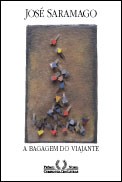
A journey through the jungle of contemporary life is what José Saramago proposes to the reader with these chronicles, which start from the most varied subjects – a street scene or a newspaper article – to present a surprising reinterpretation of the world. From the lies of politics and advertising to the poetry of small everyday gestures, from the secret life of cities to the mysteries hidden in artistic creation, nothing escapes the writer's keen eye. Armed with humor, irony, and a constant attention to the pitfalls of language, Saramago reveals in this book another facet of his concentrated expression: he thus elevates the chronicle to the level of the great novels that made him famous.
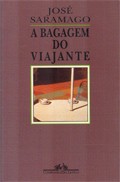
A journey through the jungle of contemporary life is what José Saramago proposes to the reader with these chronicles, which start from the most varied subjects – a street scene or a newspaper article – to present a surprising reinterpretation of the world. From the lies of politics and advertising to the poetry of small everyday gestures, from the secret life of cities to the mysteries hidden in artistic creation, nothing escapes the writer's keen eye. Armed with humor, irony, and a constant attention to the pitfalls of language, Saramago reveals in this book another facet of his concentrated expression: he thus elevates the chronicle to the level of the great novels that made him famous.
Spain
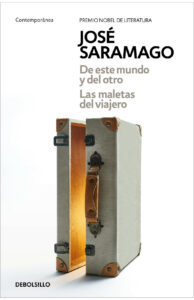
2022 (Trans.: Basilio Losada)(included in the work De este mundo y Del otro)
Special Edition Commemorating the Centenary of José Saramago's Birth
Language
Spanish
All of the books grouped in this volume contain articles written in clear and direct language, in which reflection, observation and criticism of very diverse themes are combined.
From this world and the other is a series of brief chronicles about everyday life and its mysteries. In travel bags, Saramago talks about his childhood, his family, his experiences and political mistakes, as well as the life of cities, art and museums. In both cases, his prose demonstrates fine humor and irony that invites reading. The set allows us to glimpse a direct and close writer, who seems to dialogue with his readers in person.
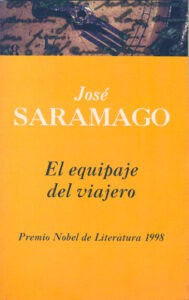
Abacus
Special edition Abacus, S. Coop. CL.
Language
Spanish
Abacus
Special edition Abacus, S. Coop. CL.
Italy

2018 (Translated by Giulia Lanciani) (in one volume with From This World and the Other)
Language
Italian
In this world and elsewhere (Feltrinelli 2013) I wrote a part of the chronache script of José Saramago in 1968 and 1969 for publications in Lisbon “A Capital” and “Jornal do Fundão”. Le cronache sono, come è noto, il prima regolare esercizio della prosa del futuro Nobel: vi si può scorgere, in filigree, allo stato embryonale, quell'immenso tessuto finale dei romanzi, in cui la meravigliosa potenza dell'invenzione allows allo scrittore di sviluppare il design ardito of the story that communicates a new vision of the infinite richness and plurality of the world and the world. È in tale prospective che vanno lette quelle lontane cronache, in cui, come afferma lo stesso Saramago, “c'è già tutto”. It was worth it to continue, with the integration of that “story” not contemplated in that previous race, that straordinary adventure, that single journey, thin at the end, across the world of ricordi, that the author has a fissato sulla letter, “perché non si loss nulla di quei minuti d'oro, ore che splendono Come alone in the tumultuous and immense sky that is the memory.
GL.
A record of the unprecedented chronicle of the Nobel Prize for José Saramago's writing.
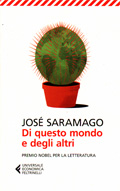
2013 (Translated by Giulia Lanciani) (in one volume with From This World and the Other)
Language
Vietnamese
“Di questo mondo e degli altri” raccoglie grande parte dei testi dei due libri di chronache scritte da José Saramago tra il 1968 e il 1969 per i giornali di Lisbona “A Capital” e “Jornal do Fundão”, e riuniti poi nei due volumi citati, pubblicati rispettividade in 1971 e nel 1973. Sono settantatré racconti that describes almost every episode of the real life seen by Saramago, in which the great Lusitanian writer alternates diverse narrative records. I feared spaziano dalle capable of the system and its great passion for gli animali and per l'ecologia; I didn't read illiterately and pastori di porci; la Rivoluzione dei garofani; l'impacciata foto dei genitori; lui stesso bambino scalzo; la nebbia del mattino; i contadini; il “mare portoghese”; l'arrotino; the person that poi diventeranno i suoi stessi personaggi… and, naturally, Lisbona and il Portogallo.
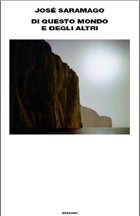
Einaudi
2006 (Translated by Giulia Lanciani)
(in a volume containing From This World and the Other)
Language
Italian
Le piú belle «cronache» scritte da Saramago in an anthology prepared expressly for the Italian public: pensieri, racconti, illuminazioni, parabole…
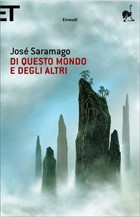
Einaudi
2006 (Translated by Giulia Lanciani)
(in a volume containing From This World and the Other)
Language
Italian
Le piú belle «cronache» scritte da Saramago in an anthology prepared expressly for the Italian public: pensieri, racconti, illuminazioni, parabole…
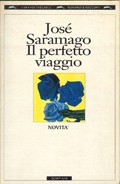
Fra drama and poetry, romanzo and saggio, the cronaca is always rico close, forse torto, a subaltern noise of the sottogenere. Queste chronache di José Saramago, written in an arc of time from 1968 to 1972, published for the first time in Italy, presenting the expression of an atmosphere that induces the author's confession and the letter with a shared sympathy. Saramago, interpellato sull'importanza che le cronache hanno avuto per il suo laboro di romanziere, ha detto: “Tutto quello che si trova nei miei romanzi si può trovare anche nelle cronache”. Forse in this parole c'è un eccesso di semplificazione, tuttavia è easily demonstrated by tra la prima riga della prima cronaca e l'ultima riga dell'ultimo romanzo, c'è un filo continuo que tutto lega e il percorso dell scrittore, internationally famous, è gia tracciato in quelle lontane cronache. (Dalla prefazione of Giulia Lanciani)
Serbia
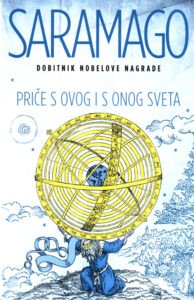
2013 (Trans.: Jasmina Nešković)
(included in the works Priče s ovog is onog sveta: “Apologue of the Fighting Cow”, “My Ascent of Everest” and “The Story of the King Who Made Deserts”)
Language
Serbian
Šta se događa kada se stvari koje ljudi upotrebljavaju pobune protiv svojih korisnika?
Kako jedan car pokušao da izoluje smrt?
Kakva je sudbinavozača, praktično zarobljenih u svojim kolima?
Zašto strada poslednji kentaur koji je vekovima šumama struggle, bežeći od ljudi?
Ispitujući vlastite izražajne mogućnosti, Saramago se najpre okušao u kratkim formama – pripovetkama, kratkim pričama, parabolama… Sabrane u dve zbirke parabola Priče s ovog is onog sveta i Putnikov prtljag, jednu zbirku pripovedaka Tobožnji predmet i novelu Priča o nepoznatom ostrvu, njegove pripovesti svedoče o sporim ali sigurnim koracima kojima se pisoc približavao svojoj pravoj vokaciji – romanu. U ovoj knjizi njegovih izabranih priča čitalac će naći ne samo mnoštvo ideja koje će blink zaokupljati čitavog života, već i sve osnovne odlike jednog neponovljivog književnog rukopisa, toliko drugačijeg da ga je nemoguće oponašati.
„Velikan evropske književnosti iznosi nam u pričama svoj osoben pogled na uvad društvenih vrednosti, otuđenje i političku represiju, nudeći svoj odgovor na takve pojave: kada sve propadne, bend metaphora je najbolja alternative.“ Morning Star
„Ovde se majstor pera ogleda u kraćim, inventivnim proznim formama, i ishod je impresivan i lucidan. Saramagov dar iu pričama se neosporno ispoljio kao iu njegovim romanima.“ Publishers Weekly